
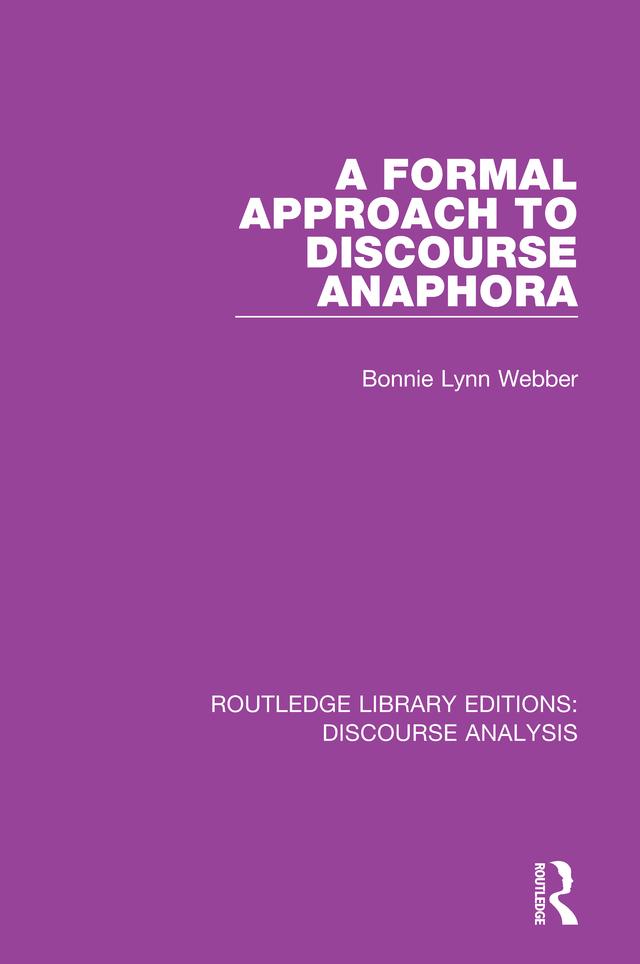
First published in 1979, this book starts from the perspective that dealing with anaphoric language can be decomposed into two complementary tasks: 1. identifying what a text potentially makes available for anaphoric reference and 2. constraining the candidate set of a given anaphoric expression down to one possible choice. The author argues there is an intimate connection between formal sentential analysis and the synthesis of an appropriate conceptual model of the discourse. Some of the issues with the creation of this conceptual model are discussed in the second chapter, which follows a background to the thesis that catalogues the types of anaphoric expression available in English and lists the types of things that can be referred to anaphorically. The third and fourth chapters examine two types of anaphoric expression that do not refer to non-linguistic entities. The final chapter details three areas into which this research could potentially be extended. This book will be of interest to students of linguistics.
Betal nemt med kort, Klarna, Apple Pay eller Google Pay. Ikke tilfreds? Du har altid 14 dages fortrydelsesret. Læs mere i vores vilkår. Har du spørgsmål, så send os en mail på hello@memmo.org.
Memmo gør det nemmere at studere – uanset hvor du er i verden. Hos os samler du dine kursusbøger og smarte studieværktøjer ét sted: resuméer, quizzer, podcasts og flashcards. Og så er der Ted, din studieven, der svarer på alt, du undrer dig over. Over 50 000 studerende studerer allerede her – bygget til at hjælpe dig med at lære hurtigere og stresse mindre.