
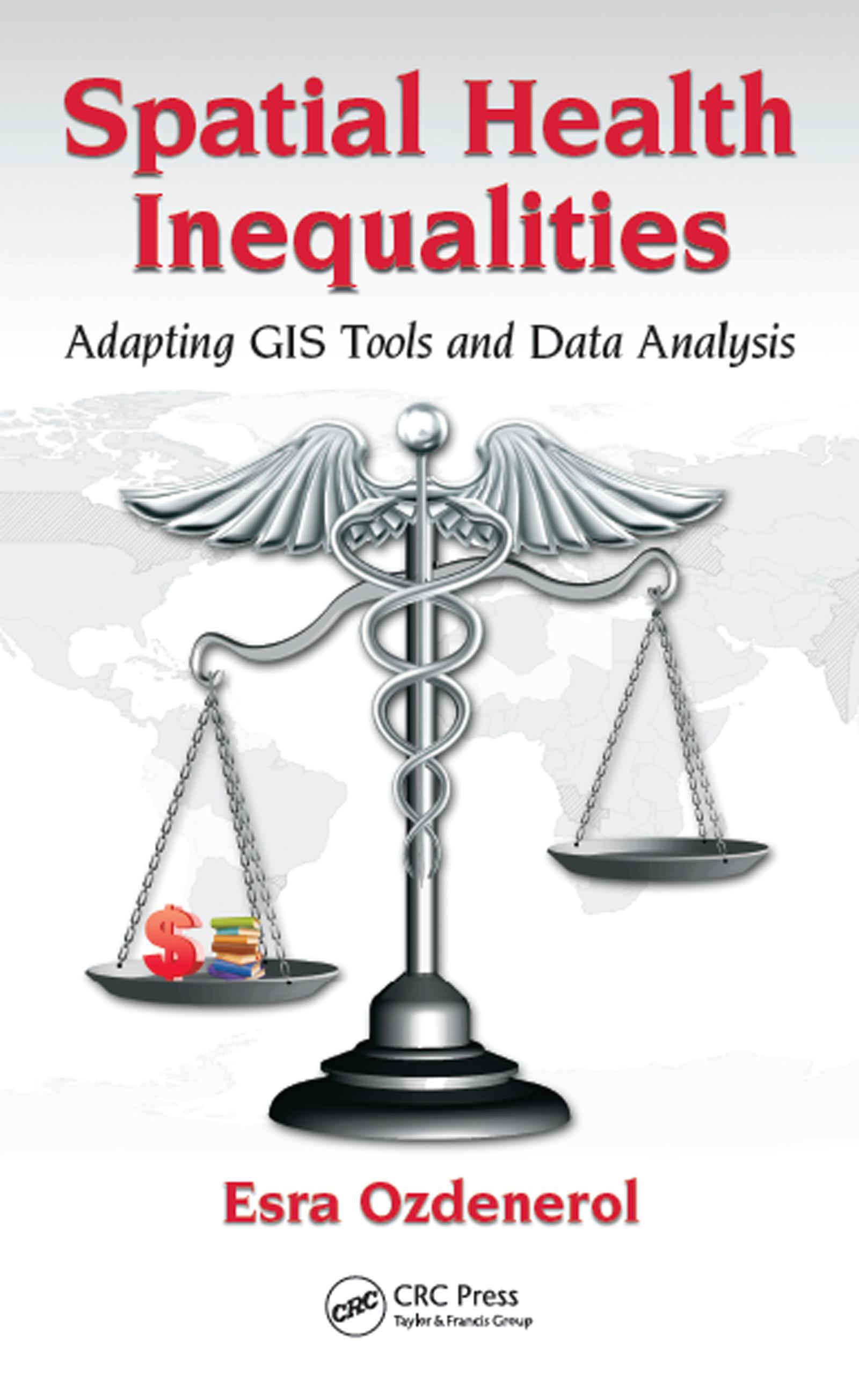
The neighborhoods and the biophysical, political, and cultural environments all play a key role in affecting health outcomes of individuals. Unequal spatial distribution of resources such as clinics, hospitals, public transportation, fresh food markets, and schools could make some communities as a whole more vulnerable and less resilient to adverse health effects. This somber reality suggests that it is rather the question of "who you are depends upon where you are" and the fact that health inequality is both a people and a place concern. That is why health inequality needs to be investigated in a spatial setting to deepen our understanding of why and how some geographical areas experience poorer health than others. This book introduces how spatial context shapes health inequalities.
Spatial Health Inequalities: Adapting GIS Tools and Data Analysis demonstrates the spatial health inequalities in six most important topics in environmental and public health, including food insecurity, birth health outcomes, infectious diseases, children’s lead poisoning, chronic diseases, and health care access. These are the topics that the author has done extensive research on and provides a detailed description of the topic from a global perspective. Each chapter identifies relevant data and data sources, discusses key literature on appropriate techniques, and then illustrates with real data with mapping and GIS techniques. This is a unique book for students, geographers, clinicians, health and research professionals and community members interested in applying GIS and spatial analysis to the study of health inequalities.
Betal nemt med kort, Klarna, Apple Pay eller Google Pay. Ikke tilfreds? Du har altid 14 dages fortrydelsesret. Læs mere i vores vilkår. Har du spørgsmål, så send os en mail på hello@memmo.org.
Memmo gør det nemmere at studere – uanset hvor du er i verden. Hos os samler du dine kursusbøger og smarte studieværktøjer ét sted: resuméer, quizzer, podcasts og flashcards. Og så er der Ted, din studieven, der svarer på alt, du undrer dig over. Over 50 000 studerende studerer allerede her – bygget til at hjælpe dig med at lære hurtigere og stresse mindre.