
In today’s fast-moving, high-technology environment, the focus on quality has given way to a focus on innovation. From presidents of the United States to presidents of Fortune 500 companies, it is clear that everyone thinks innovation is extremely important. The challenge is that few people stop to define why innovation is important—to understand what’s driving the need for more innovation. We all agree that more frequent innovation is important, even necessary.
There is actually a growing body of evidence that indicates that looking outside of your company (rather than purely looking internally) and to customers’ needs, using the tools in this Handbook, will lead to more innovative ideas. Responding to customers’ needs is the key to a successful business. You can use these tools to talk to customers—satisfied ones, unsatisfied ones, potential customers, people who would never buy your product or service, and also people you have never considered as a potential customer. In addition, these tools will help you ask your competitors’ customers about what makes them happy with the current businesses and offerings in the industry, why they buy or do not buy from you, your competitors, and other industries. These tools will help you understand the steps in the customer journey they need to take, what delights and frustrates them, and what their pain points are.
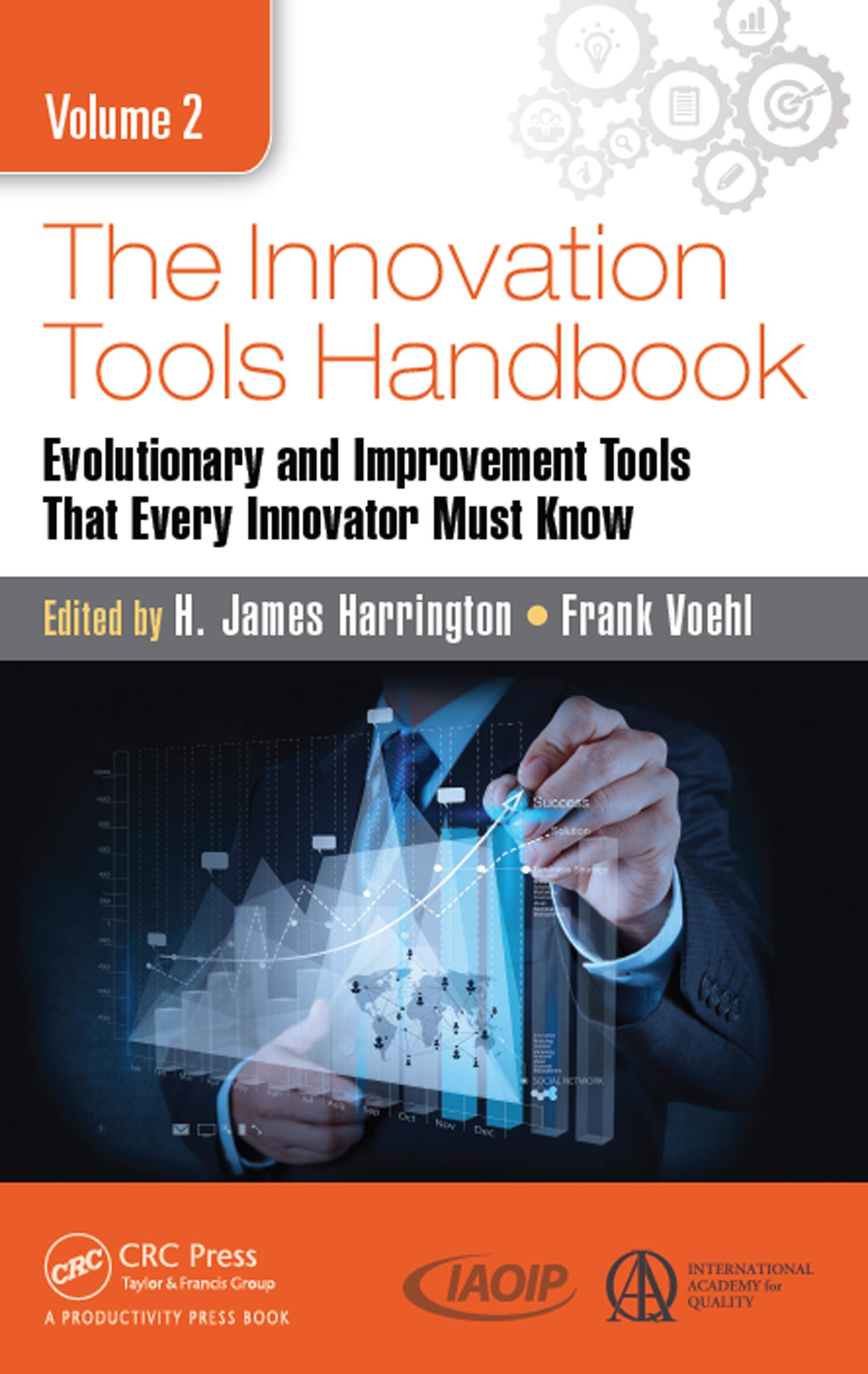
The three volumes of The Innovation Tools Handbook cover 76 top-rated tools and methods, from the hundreds available, that every innovator must master to be successful. Covering evolutionary and/or improvement innovative tools and methodologies, Volume 2 presents 23 tools/methodologies related to innovative evolutionary products, processes, and services, or the improvement of existing ones.
For each tool, the book provides a definition, identifies the user of the tool, explains what phases of the innovation process the tool is used, describes how the tool is used, supplies examples of the outputs from the tool, identifies software that can maximize its effectiveness, and includes references and suggestions for further reading. Ideation is about developing ideas on how to seize identified opportunities. What are the possible answers to your breakthrough questions? Having a deep understanding about the customer, their needs and pain points, as well as the existing solutions (i.e. business models in the industry) will naturally lead to new ideas. How seriously you do your discovery homework using the tools in these Handbooks will determine not only how fast you create ideas, but about how likely these ideas are to succeed.
Tools and methodologies covered include: 5 why questions, Affinity diagrams, attribute listing, brainwriting 6–3–5, cause-and-effect diagrams, creative problem solving model, design for tools, flowcharting, force field analysis, Kano analysis, nominal group technique, plan–do–check–act, reengineering/redesign, reverse engineering, robust design, SCAMPER, simulations, six thinking hats, social networks, solution analysis diagrams, statistical analysis, tree diagram, and value analysis.
The authors believe that by making effective use of the tools and methodologies presented in this book, your organization can increase the percentage of creative/innovative ideas by five to eight times its present performance level.
Betal nemt med kort, Klarna, Apple Pay eller Google Pay. Ikke tilfreds? Du har altid 14 dages fortrydelsesret. Læs mere i vores vilkår. Har du spørgsmål, så send os en mail på hello@memmo.org.
Memmo gør det nemmere at studere – uanset hvor du er i verden. Hos os samler du dine kursusbøger og smarte studieværktøjer ét sted: resuméer, quizzer, podcasts og flashcards. Og så er der Ted, din studieven, der svarer på alt, du undrer dig over. Over 50 000 studerende studerer allerede her – bygget til at hjælpe dig med at lære hurtigere og stresse mindre.