
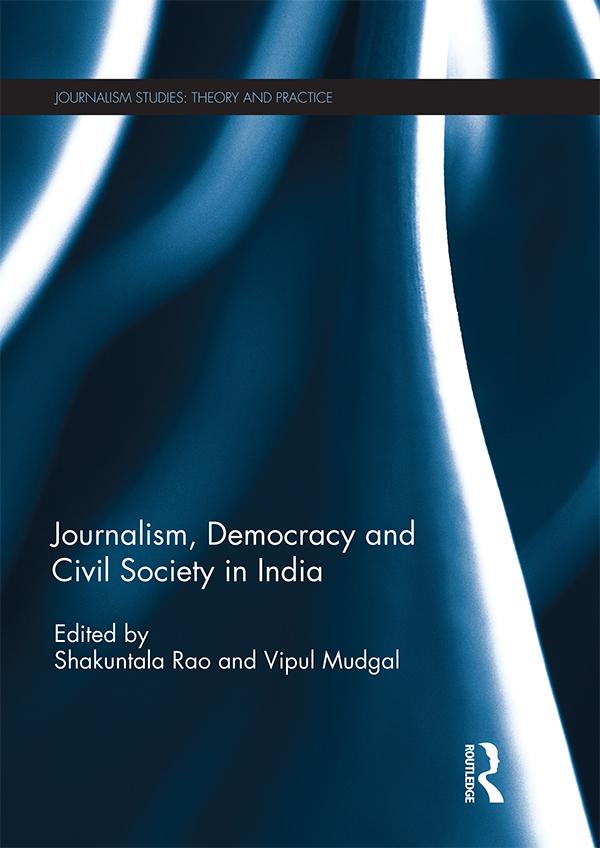
Since independence in 1947 India has remained a stable and functioning democracy in the face of enormous challenges. Amid a variety of interlinking contraries and a burgeoning media – one of the largest in the world – there has been a serious dearth of scholarship on the role of journalists and dramatically changing journalism practices. This book brings together some of the best known scholars on Indian journalism to ask questions such as: Can the plethora of privately run cable news channels provide the discursive space needed to strengthen the practices of democracy, not just inform results from the ballot boxes? Can neoliberal media ownership patterns provide space for a critical and free journalistic culture to evolve? What are the ethical challenges editors and journalists face on a day-to-day basis in a media industry which has exploded? In answering some of these questions, the contributors to this volume are equally sensitive to the historical, social, and cultural context in which Indian journalism evolved, but they do not all reach the same conclusion about the role of journalism in Indian civil society and democracy. This book was originally published as a special issue of Journalism Studies.
Betal nemt med kort, Klarna, Apple Pay eller Google Pay. Ikke tilfreds? Du har altid 14 dages fortrydelsesret. Læs mere i vores vilkår. Har du spørgsmål, så send os en mail på hello@memmo.org.
Memmo gør det nemmere at studere – uanset hvor du er i verden. Hos os samler du dine kursusbøger og smarte studieværktøjer ét sted: resuméer, quizzer, podcasts og flashcards. Og så er der Ted, din studieven, der svarer på alt, du undrer dig over. Over 50 000 studerende studerer allerede her – bygget til at hjælpe dig med at lære hurtigere og stresse mindre.