
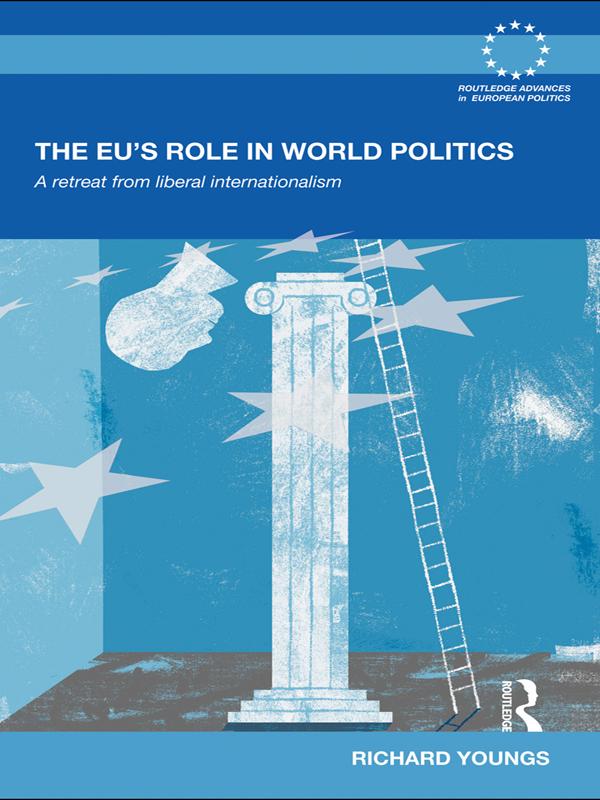
Debates on EU foreign policy have been dominated by two opposing schools of argument. One includes a broad range of work that extols the virtues of a European liberal concept of power and the other sees the EU’s commitment to cosmopolitan liberalism and soft power as a sign of weakness rather than strength.
This book judges the EU on its own terms as a liberal power, examining its policy record, rather than simply asserting that the EU’s liberal commitments in themselves denote either a superior or inferior foreign policy approach. Youngs argues that the challenges facing Europe’s role in the world appear to be in its retreat from liberal internationalism through a series of case studies on policy areas: trade, multilateral diplomacy, security, development cooperation, democracy and human rights, and energy security. Presenting detailed evidence that show the EU is moving away from cosmopolitan strategy, Youngs asserts that Europe needs to reassess its foreign policies if it is to defend the kind of liberal world order necessary for its own and other countries’ long term interests.
This book will be of strong interest to students and scholars of European politics, Foreign Policy and International Relations.
Betal nemt med kort, Klarna, Apple Pay eller Google Pay. Ikke tilfreds? Du har altid 14 dages fortrydelsesret. Læs mere i vores vilkår. Har du spørgsmål, så send os en mail på hello@memmo.org.
Memmo gør det nemmere at studere – uanset hvor du er i verden. Hos os samler du dine kursusbøger og smarte studieværktøjer ét sted: resuméer, quizzer, podcasts og flashcards. Og så er der Ted, din studieven, der svarer på alt, du undrer dig over. Over 50 000 studerende studerer allerede her – bygget til at hjælpe dig med at lære hurtigere og stresse mindre.