
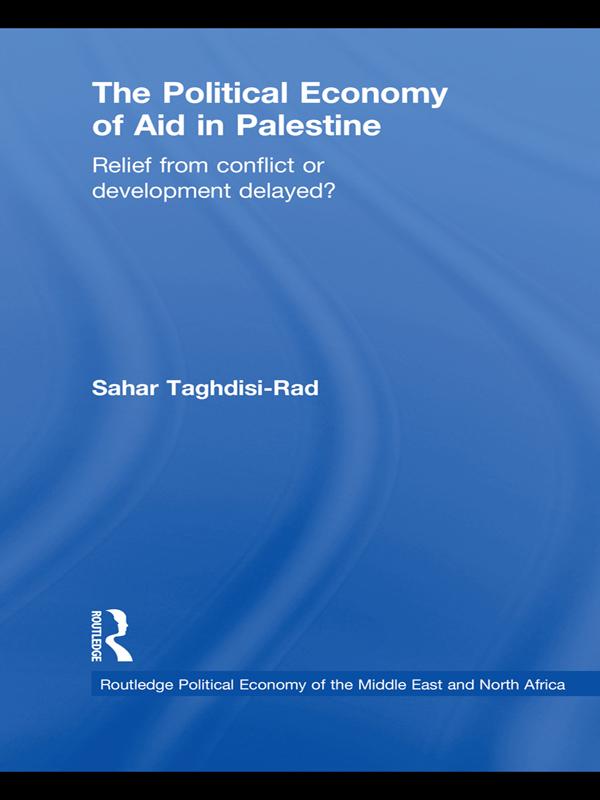
Despite for many years receiving the highest per capita aid worldwide, the economies of the West Bank and Gaza Strip have failed to achieve any lasting developmental outcomes and suffer from major weaknesses which undermine their very survival. This book argues that the dominant, mainstream approach to the study of aid and aid effectiveness is theoretically and empirically inadequate for a comprehensive understanding and analysis of the workings of aid in developing countries, particularly those undergoing conflict. This book examines the nature of donor operations in Palestine, highlighting the political and ideological determinants of aid allocation and effectiveness, and focussing on the role of trade-related donor assistance in Palestine, more commonly known as Aid for Trade. It discusses how such trade-related assistance is only another instance of donors working ‘around’ the conflict, as opposed to taking it into account; and how aid to Palestine cannot bring about significant improvement as long as the Palestinian economy is fundamentally affected by Israeli occupation, settlements and blockade. It argues that unless restructured and more carefully targeted, aid can only act as a temporary relief mechanism. Furthermore, the book sheds light on critical areas within Palestinian territories that are in need of development and require significant and immediate attention at both national and international level.
Betal nemt med kort, Klarna, Apple Pay eller Google Pay. Ikke tilfreds? Du har altid 14 dages fortrydelsesret. Læs mere i vores vilkår. Har du spørgsmål, så send os en mail på hello@memmo.org.
Memmo gør det nemmere at studere – uanset hvor du er i verden. Hos os samler du dine kursusbøger og smarte studieværktøjer ét sted: resuméer, quizzer, podcasts og flashcards. Og så er der Ted, din studieven, der svarer på alt, du undrer dig over. Over 50 000 studerende studerer allerede her – bygget til at hjælpe dig med at lære hurtigere og stresse mindre.