
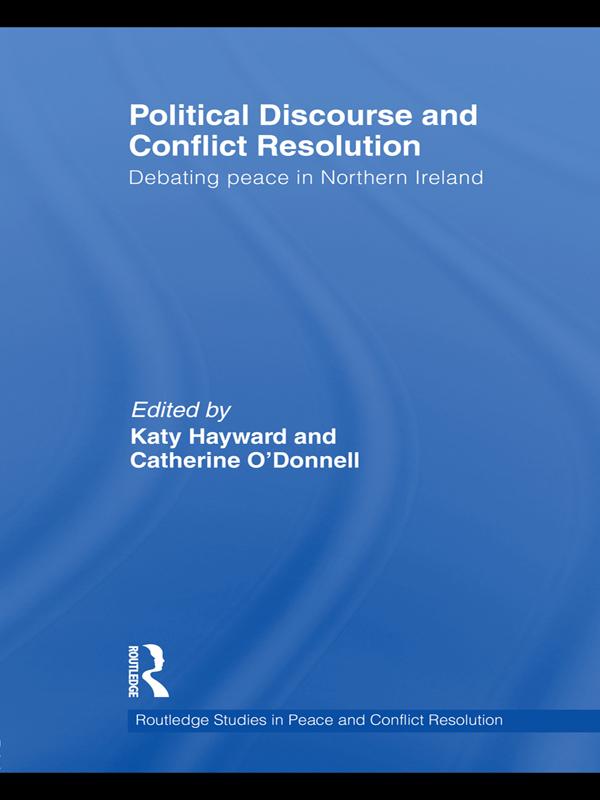
This book offers new insights into the close relationship between political discourses and conflict resolution through critical analysis of the role of discursive change in a peace process.
Just as a peace process has many dimensions and stakeholders, so the discourses considered here come from a wide range of sources and actors. The book contains in-depth analyses of official discourses used to present the peace process, the discourses of political party leaders engaging (or otherwise) with it, the discourses of community-level activists responding to it, and the discourses of the media and the academy commenting on it. These discourses reflect varying levels of support for the peace process – from obstruction to promotion – and the role of language in moving across this spectrum according to issue and occasion. Common to all these analyses is the conviction that the language used by political protagonists and cultural stakeholders has a profound effect on progression towards peace.
Bringing together leading experts on Northern Ireland’s peace process from a range of academic disciplines, including political science, sociology, linguistics, history, geography, law, and peace studies, this book offers new insights into the discursive dynamics of violent political conflict and its resolution.
Betal nemt med kort, Klarna, Apple Pay eller Google Pay. Ikke tilfreds? Du har altid 14 dages fortrydelsesret. Læs mere i vores vilkår. Har du spørgsmål, så send os en mail på hello@memmo.org.
Memmo gør det nemmere at studere – uanset hvor du er i verden. Hos os samler du dine kursusbøger og smarte studieværktøjer ét sted: resuméer, quizzer, podcasts og flashcards. Og så er der Ted, din studieven, der svarer på alt, du undrer dig over. Over 50 000 studerende studerer allerede her – bygget til at hjælpe dig med at lære hurtigere og stresse mindre.