
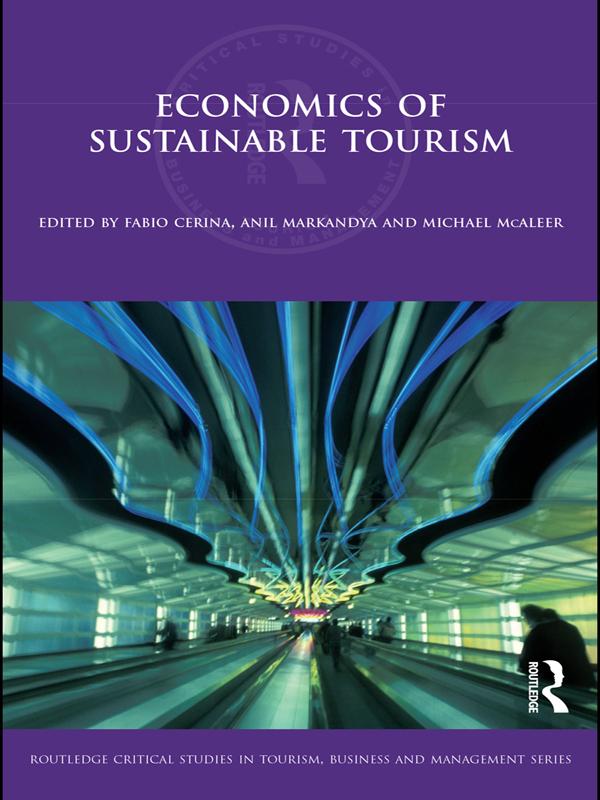
Tourism is one of the world's largest industries and one of its fastest growing economic sectors helping to generate income and employment for local people. At the same time, it has many negative outsourced effects on the environment and local culture. Achieving a more sustainable pattern of tourism development is high on the global agenda aiming to meet human needs while preserving the environment now and for the future.
The Economics of Sustainable Tourism aims to critically explore how tourism economic development can move closer to a sustainable ideal from a firm economic analytic anchor. Grounded in economic theory and application it analyzes tourist’s satisfaction and impacts of tourism on the host community, investigates the productivity of the industry and identify factors which could increase economic and sustainable development such as trade relationships. It offers further insight into how destinations sustainability can be measured, economic benefits of a more sustainable destination and sets the agenda for future research. The book includes a range of theoretical and empirical perspectives and includes cutting edge research from international scholars.
This significant volume provides a new perspective on the sustainable tourism debate and will be a valuable read for students, researchers, academics of Tourism and Economics.
Betal nemt med kort, Klarna, Apple Pay eller Google Pay. Ikke tilfreds? Du har altid 14 dages fortrydelsesret. Læs mere i vores vilkår. Har du spørgsmål, så send os en mail på hello@memmo.org.
Memmo gør det nemmere at studere – uanset hvor du er i verden. Hos os samler du dine kursusbøger og smarte studieværktøjer ét sted: resuméer, quizzer, podcasts og flashcards. Og så er der Ted, din studieven, der svarer på alt, du undrer dig over. Over 50 000 studerende studerer allerede her – bygget til at hjælpe dig med at lære hurtigere og stresse mindre.