
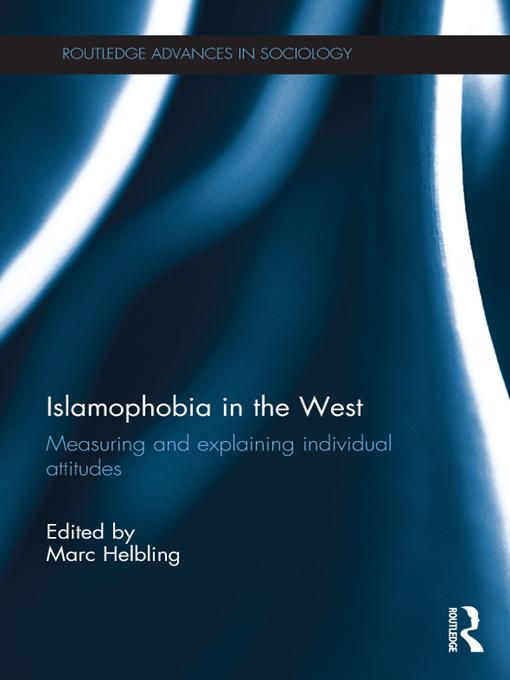
Since the late 1980s, growing migration from countries with a Muslim cultural background, and increasing Islamic fundamentalism related to terrorist attacks in Western Europe and the US, have created a new research field investigating the way states and ordinary citizens react to these new phenomena. However, whilst we already know much about how Islam finds its place in Western Europe and North America, and how states react to Muslim migration, we know surprisingly little about the attitudes of ordinary citizens towards Muslim migrants and Islam. Islamophobia has only recently started to be addressed by social scientists.
With contributions by leading researchers from many countries in Western Europe and North America, this book brings a new, transatlantic perspective to this growing field and establishes an important basis for further research in the area. It addresses several essential questions about Islamophobia, including:
- what exactly is Islamophobia and how can we measure it?
- how is it related to similar social phenomena, such as xenophobia?
- how widespread are Islamophobic attitudes, and how can they be explained?
- how are Muslims different from other outgroups and what role does terrorism and 9/11 play?
Islamophobia in the West will be of interest to students and scholars of sociology, religious studies, social psychology, political science, ethnology, and legal science.
Betal nemt med kort, Klarna, Apple Pay eller Google Pay. Ikke tilfreds? Du har altid 14 dages fortrydelsesret. Læs mere i vores vilkår. Har du spørgsmål, så send os en mail på hello@memmo.org.
Memmo gør det nemmere at studere – uanset hvor du er i verden. Hos os samler du dine kursusbøger og smarte studieværktøjer ét sted: resuméer, quizzer, podcasts og flashcards. Og så er der Ted, din studieven, der svarer på alt, du undrer dig over. Over 50 000 studerende studerer allerede her – bygget til at hjælpe dig med at lære hurtigere og stresse mindre.