
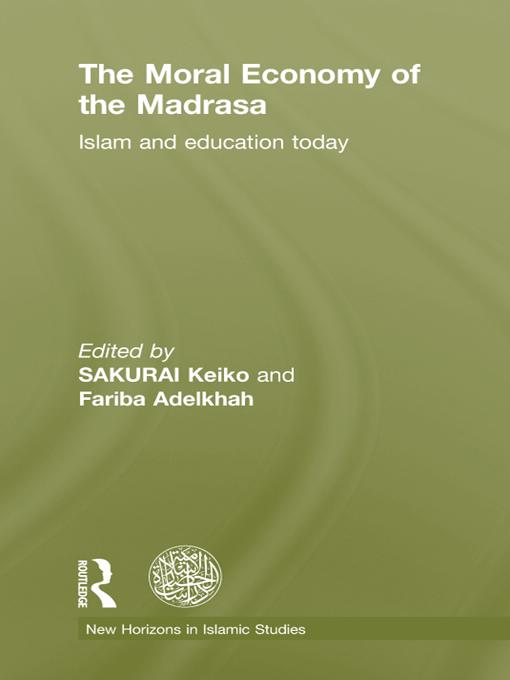
The revival of madrasas in the 1980s coincided with the rise of political Islam and soon became associated with the "clash of civilizations" between Islam and the West. This volume examines the rapid expansion of madrasas across Asia and the Middle East and analyses their role in society within their local, national and global context.
Based on anthropological investigations in Afghanistan, Bangladesh, China, Iran, and Pakistan, the chapters take a new approach to the issue, examining the recent phenomenon of women in madrasas; Hui Muslims in China; relations between the Iran’s Shia seminary after the 1979-Islamic revolution and Shia in Pakistan and Afghanistan; and South Asian madrasas. Emphasis is placed on the increased presence of women in these institutions, and the reciprocal interactions between secular and religious schools in those countries. Taking into account social, political and demographic changes within the region, the authors show how madrasas have been successful in responding to the educational demand of the people and how they have been modernized their style to cope with a changing environment.
A timely contribution to a subject with great international appeal, this book will be of great interest to students and scholars of international politics, political Islam, Middle East and Asian studies and anthropology.
Betal nemt med kort, Klarna, Apple Pay eller Google Pay. Ikke tilfreds? Du har altid 14 dages fortrydelsesret. Læs mere i vores vilkår. Har du spørgsmål, så send os en mail på hello@memmo.org.
Memmo gør det nemmere at studere – uanset hvor du er i verden. Hos os samler du dine kursusbøger og smarte studieværktøjer ét sted: resuméer, quizzer, podcasts og flashcards. Og så er der Ted, din studieven, der svarer på alt, du undrer dig over. Over 50 000 studerende studerer allerede her – bygget til at hjælpe dig med at lære hurtigere og stresse mindre.