
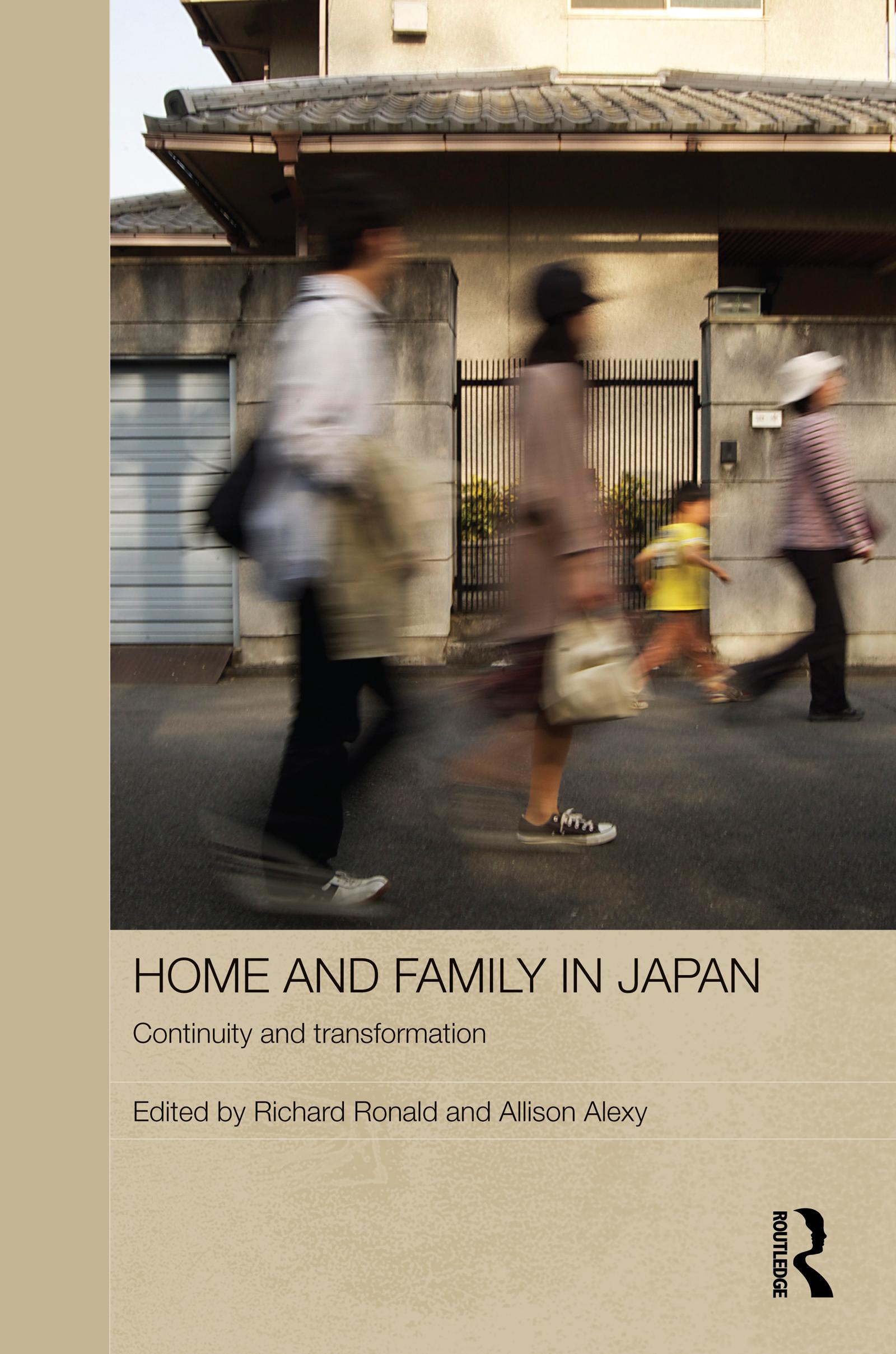
In the Japanese language the word ‘ie’ denotes both the materiality of homes and family relations within. The traditional family and family house - often portrayed in ideal terms as key foundations of Japanese culture and society - have been subject to significant changes in recent years. This book comprehensively addresses various aspects of family life and dwelling spaces, exploring how homes, household patterns and kin relations are reacting to contemporary social, economic and urban transformations, and the degree to which traditional patterns of both houses and households are changing.
The book contextualises the shift from the hegemonic post-war image of standard family life, to the nuclear family and to a situation now where Japanese homes are more likely to include unmarried singles; childless couples; divorcees; unmarried adult children and elderly relatives either living alone or in nursing homes. It discusses how these new patterns are both reinforcing and challenging typical understandings of Japanese family life.
Betal nemt med kort, Klarna, Apple Pay eller Google Pay. Ikke tilfreds? Du har altid 14 dages fortrydelsesret. Læs mere i vores vilkår. Har du spørgsmål, så send os en mail på hello@memmo.org.
Memmo gør det nemmere at studere – uanset hvor du er i verden. Hos os samler du dine kursusbøger og smarte studieværktøjer ét sted: resuméer, quizzer, podcasts og flashcards. Og så er der Ted, din studieven, der svarer på alt, du undrer dig over. Over 50 000 studerende studerer allerede her – bygget til at hjælpe dig med at lære hurtigere og stresse mindre.