
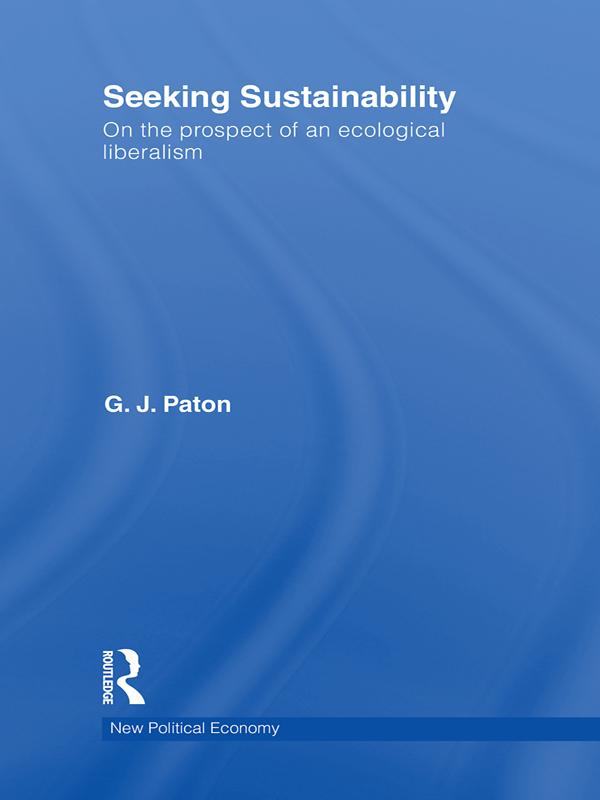
The ideas of neoliberalism perpetuate a disembedded and dichotomised view of economy-ecology relations. The renewed interest in climate change and sustainability attests to the lack of progress achieved by the ‘sustainable development’ regime and to the need for more appropriate frameworks for guiding social organisation toward ecological sustainability. This book is born of the need for a critique of current approaches to environmental policy and governance and the search for alternative sustainability frameworks.
Utilising a conceptual approach based on the Polanyian concept of ‘embeddedness’, this book argues that the links between economic theory, neo-liberalism, and the current regime of sustainable development, have rendered ‘sustainability’ a discursive frame in the service of economic rather than ecological goals. In rejecting the integrity of ‘environmental neo-liberalism’, Paton argues there are some clear points of divergence between liberalism and neo-liberalism. She subsequently examines separately the impact on liberalism of efforts to integrate environmental concerns in order to determine if therein lies the potential for an effective reformist politics of ‘ecological sustainability’.
Betal nemt med kort, Klarna, Apple Pay eller Google Pay. Ikke tilfreds? Du har altid 14 dages fortrydelsesret. Læs mere i vores vilkår. Har du spørgsmål, så send os en mail på hello@memmo.org.
Memmo gør det nemmere at studere – uanset hvor du er i verden. Hos os samler du dine kursusbøger og smarte studieværktøjer ét sted: resuméer, quizzer, podcasts og flashcards. Og så er der Ted, din studieven, der svarer på alt, du undrer dig over. Over 50 000 studerende studerer allerede her – bygget til at hjælpe dig med at lære hurtigere og stresse mindre.