
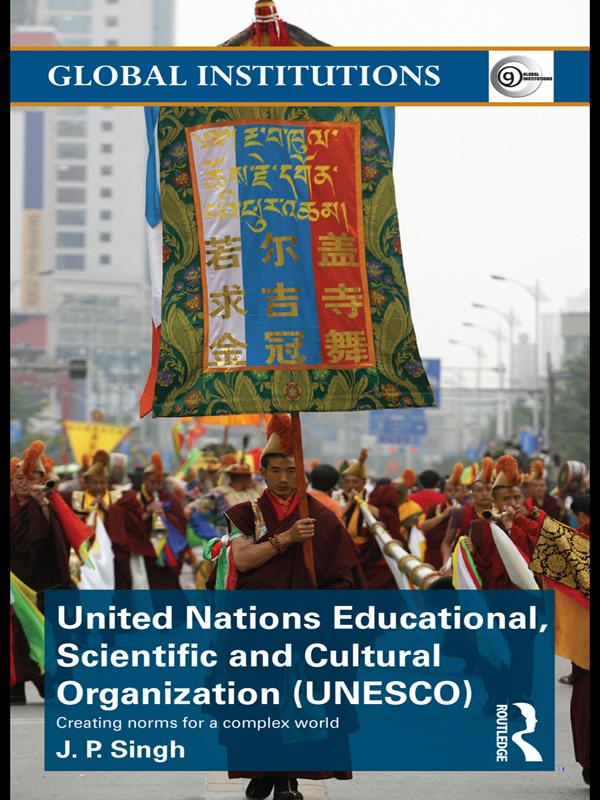
This book traces the history of UNESCO from its foundational idealism to its current stature as the preeminent international organization for science, education, and culture, building a well rounded understanding of this important organization.
The book:
- provides an overview of the organization and its institutional architecture in the context of its humanistic idealism
- details the subsequent challenges UNESCO faced through cold war and power politics, global dependence and interdependence, and the rise of identity and culture in global politics
- analyses the functioning of UNESCO administration, finance, and its various constituencies including the secretariat, member-states, and civil society
- explores the major controversies and issues underlying the initiatives in education, sciences, culture and communication
- examines the current agenda and future challenges through three major issues in UNESCO: Education or All, digital divide issues, and norms on cultural diversity
- assesses the role of UNESCO in making norms in complex world of multiple actors and intersecting issue-areas.
Reflecting on UNESCO’s vision, its everyday practices, and future challenges; this work is an essential resource for students and scholars of international relations and international organizations.
Betal nemt med kort, Klarna, Apple Pay eller Google Pay. Ikke tilfreds? Du har altid 14 dages fortrydelsesret. Læs mere i vores vilkår. Har du spørgsmål, så send os en mail på hello@memmo.org.
Memmo gør det nemmere at studere – uanset hvor du er i verden. Hos os samler du dine kursusbøger og smarte studieværktøjer ét sted: resuméer, quizzer, podcasts og flashcards. Og så er der Ted, din studieven, der svarer på alt, du undrer dig over. Over 50 000 studerende studerer allerede her – bygget til at hjælpe dig med at lære hurtigere og stresse mindre.