
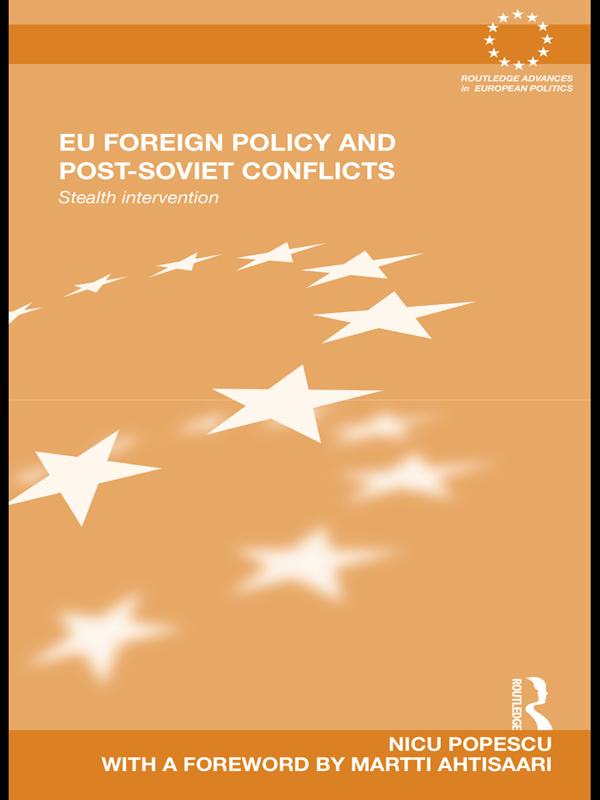
The European Union is still emerging as a fully fledged foreign policy actor. The vagaries of this process are clearly visible, yet insufficiently explained in the EU policies towards the post-Soviet space.
EU Foreign Policy and Post-Soviet Conflicts examines EU intervention and non-intervention in conflict resolution, with a specific focus on the EU’s role in the post-soviet conflicts in the South Caucasus and Moldova: Abkhazia, South Ossetia, Nagorno-Karabakh and Transnistria. It explains how EU foreign policy affected these conflicts, but more importantly what EU intervention in these conflicts reveal about the EU itself. Based on extensive field research, the author argues that the reluctant EU intervention in post-Soviet conflicts results from a dichotomous relationship between EU institutions and some EU member states. Popescu argues this demonstrates that EU institutions use policies of ‘stealth intervention’ where they seek to play a greater role in the post-Soviet space, but they do so through relatively low-profile, uncontroversial and depoliticised actions in order to avoid visible Russian opposition.
Exploring an array of questions related to the EU as a foreign policy actor, this book traces the politics of conflict intervention by EU institutions using original empirical data related to the EU decision making process and will be of interest to students and scholars of European politics, conflict resolution, foreign policy and Post-Soviet politics.
Betal nemt med kort, Klarna, Apple Pay eller Google Pay. Ikke tilfreds? Du har altid 14 dages fortrydelsesret. Læs mere i vores vilkår. Har du spørgsmål, så send os en mail på hello@memmo.org.
Memmo gør det nemmere at studere – uanset hvor du er i verden. Hos os samler du dine kursusbøger og smarte studieværktøjer ét sted: resuméer, quizzer, podcasts og flashcards. Og så er der Ted, din studieven, der svarer på alt, du undrer dig over. Over 50 000 studerende studerer allerede her – bygget til at hjælpe dig med at lære hurtigere og stresse mindre.