
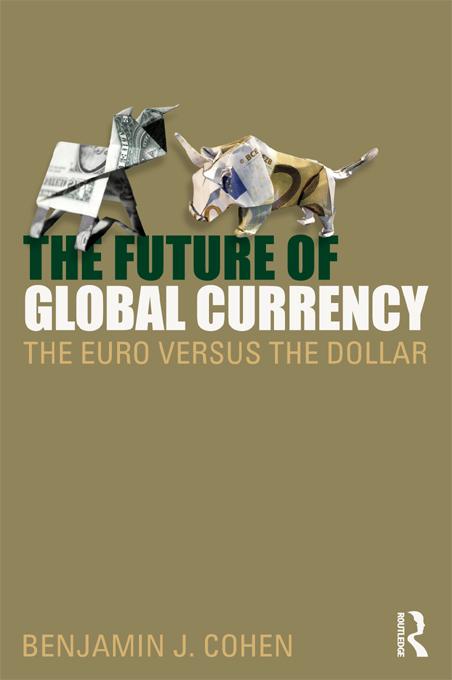
Can the euro challenge the supremacy of the U.S. dollar as a global currency? From the time Europe’s joint money was born, many have predicted that it would soon achieve parity with the dollar or possibly even surpass it. In reality, however, the euro has remained firmly planted in the dollar’s shadow. The essays collected in this volume explain why. Because of America’s external deficits and looming foreign debt, the dollar can never be as dominant as it once was. But Europe’s money is unable to mount an effective challenge. The euro suffers from a number of critical structural deficiencies, including an anti-growth bias that is built into the institutions of the monetary union and an ambiguous governance structure that sows doubts among prospective users. As recent events have demonstrated, members of the euro zone remain vulnerable to financial crisis. Moreover, lacking a single voice, the bloc continues to punch below its weight in monetary diplomacy. The world seems headed toward a leaderless monetary order, with several currencies in contention but none clearly dominant.
This collection distils the views of one of the world’s leading scholars in global currency, and will be of considerable interest to students and scholars of international finance and international political economy.
Betal nemt med kort, Klarna, Apple Pay eller Google Pay. Ikke tilfreds? Du har altid 14 dages fortrydelsesret. Læs mere i vores vilkår. Har du spørgsmål, så send os en mail på hello@memmo.org.
Memmo gør det nemmere at studere – uanset hvor du er i verden. Hos os samler du dine kursusbøger og smarte studieværktøjer ét sted: resuméer, quizzer, podcasts og flashcards. Og så er der Ted, din studieven, der svarer på alt, du undrer dig over. Over 50 000 studerende studerer allerede her – bygget til at hjælpe dig med at lære hurtigere og stresse mindre.