
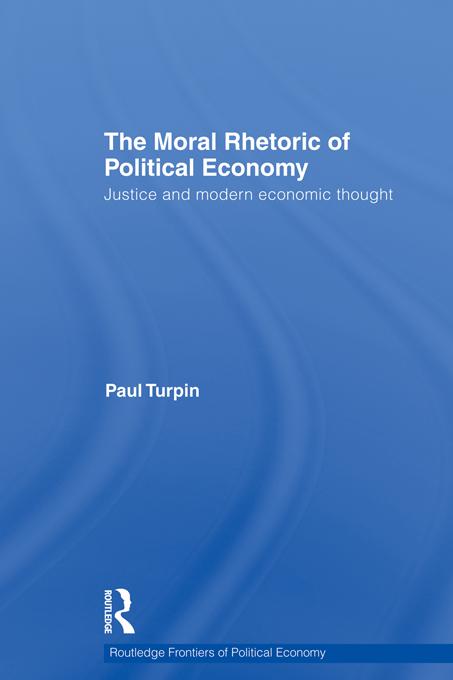
Two of the most important economics treatise are Adam Smith's Theory of Moral Sentiments and Wealth of Nations and Milton Friedman's Capitalism and Freedom. In this book, Paul Turpin provides a rhetorical analysis of these texts arguing that both Smith and Friedman use argumentative and narrative depictions of character to reinforce a sense of societal decorum as a stabilizing foundation for their theories of liberal political economy.
The comparison of Smith and Friedman by itself is a major contribution to the development of the history of economic thought. It adds a new, historical, depth to the heterodox analyses and critiques of twentieth century economics by writers such as Giocoli and Mirowski. The issue of the social constitution of identity, which is at the core of this book, is a hot topic in economic methodology and as such this book by a promising young historian of economic thought will be roundly applauded.
Betal nemt med kort, Klarna, Apple Pay eller Google Pay. Ikke tilfreds? Du har altid 14 dages fortrydelsesret. Læs mere i vores vilkår. Har du spørgsmål, så send os en mail på hello@memmo.org.
Memmo gør det nemmere at studere – uanset hvor du er i verden. Hos os samler du dine kursusbøger og smarte studieværktøjer ét sted: resuméer, quizzer, podcasts og flashcards. Og så er der Ted, din studieven, der svarer på alt, du undrer dig over. Over 50 000 studerende studerer allerede her – bygget til at hjælpe dig med at lære hurtigere og stresse mindre.