
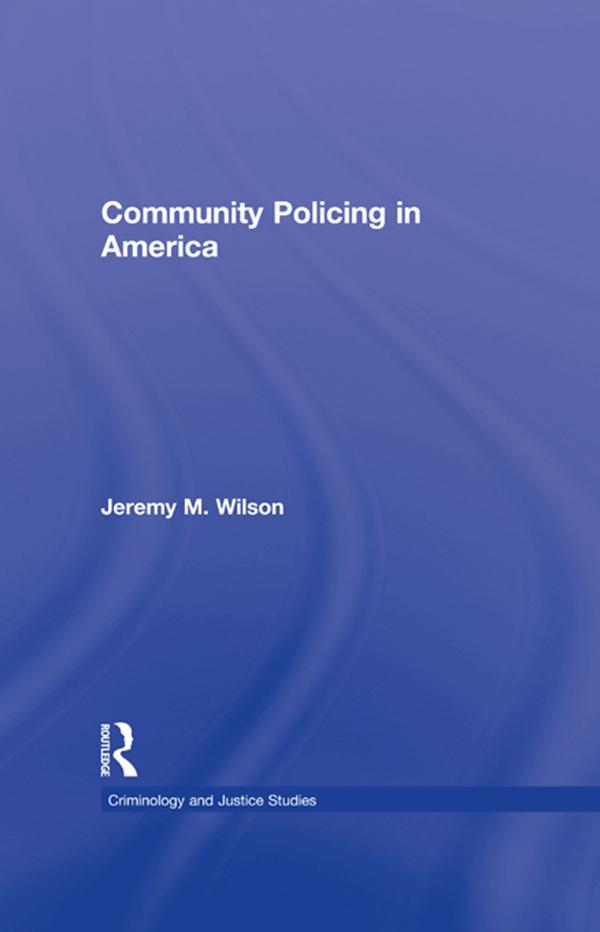
Although law enforcement officials have long recognized the need to cooperate with the communities they serve, recent efforts to enhance performance and maximize resources have resulted in a more strategic approach to collaboration among police, local governments, and community members. The goal of these so-called "community policing" initiatives is to prevent neighborhood crime, reduce the fear of crime, and enhance the quality of life in communities. Despite the growing national interest in and support for community policing, the factors that influence an effective implementation have been largely unexplored.
Drawing on data from nearly every major U.S. municipal police force, Community Policing in America is the first comprehensive study to examine how the organizational context and structure of police organizations impact the implementation of community policing. Jeremy Wilson’s book offers a unique theoretical framework within which to consider community policing, and identifies key internal and external factors that can facilitate or impede this process, including community characteristics, geographical region, police chief turnover, and structural complexity and control. It also provides a simple tool that practitioners, policymakers, and researchers can use to measure community policing in specific police organizations.
Betal nemt med kort, Klarna, Apple Pay eller Google Pay. Ikke tilfreds? Du har altid 14 dages fortrydelsesret. Læs mere i vores vilkår. Har du spørgsmål, så send os en mail på hello@memmo.org.
Memmo gør det nemmere at studere – uanset hvor du er i verden. Hos os samler du dine kursusbøger og smarte studieværktøjer ét sted: resuméer, quizzer, podcasts og flashcards. Og så er der Ted, din studieven, der svarer på alt, du undrer dig over. Over 50 000 studerende studerer allerede her – bygget til at hjælpe dig med at lære hurtigere og stresse mindre.