
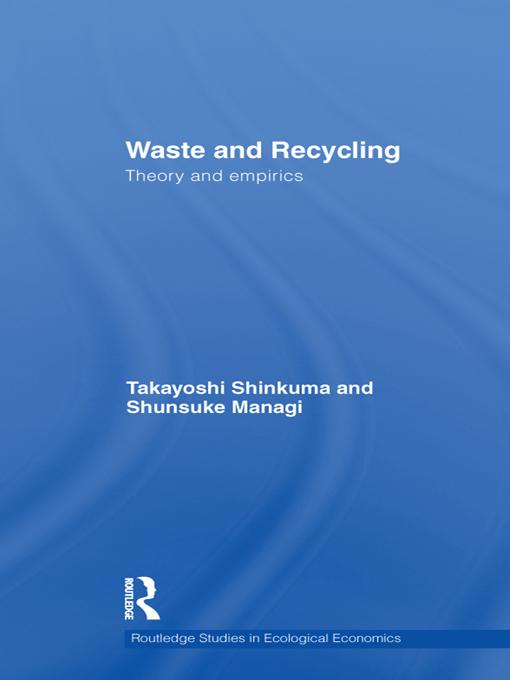
As "business as usual" has become the mantra of today's world, it's unlikely to see a decrease in hazardous waste generated from greater economic growth. Written by renowned experts, the book suggests a solution, supported by theoretical arguments to this waste problem. The book discusses how main problems for waste management can be addressed through appropriate policies adopted by governments in OECD countries.
The book also raises thoughtful questions on how household waste management services should be privatized and who should pay for the disposal and recycling costs. It attempts to answer these questions. The book considers several factors hindering the first-best optimal outcome and highlights two crucial ones. It elaborates further with models and the solutions on how to overcome these obstacles.
The book covers not only traditional resource economics and waste management, but also the recent problem of Electric waste (E-waste) and illustrates in details, how the environments of developing countries are inevitably polluted even with the Basel ban Amendment in place. The book proposes an alternative international trading regulation to address E-waste. This book will certainly appeal to industry decision-makers, policy makers and legislators.
Betal nemt med kort, Klarna, Apple Pay eller Google Pay. Ikke tilfreds? Du har altid 14 dages fortrydelsesret. Læs mere i vores vilkår. Har du spørgsmål, så send os en mail på hello@memmo.org.
Memmo gør det nemmere at studere – uanset hvor du er i verden. Hos os samler du dine kursusbøger og smarte studieværktøjer ét sted: resuméer, quizzer, podcasts og flashcards. Og så er der Ted, din studieven, der svarer på alt, du undrer dig over. Over 50 000 studerende studerer allerede her – bygget til at hjælpe dig med at lære hurtigere og stresse mindre.