
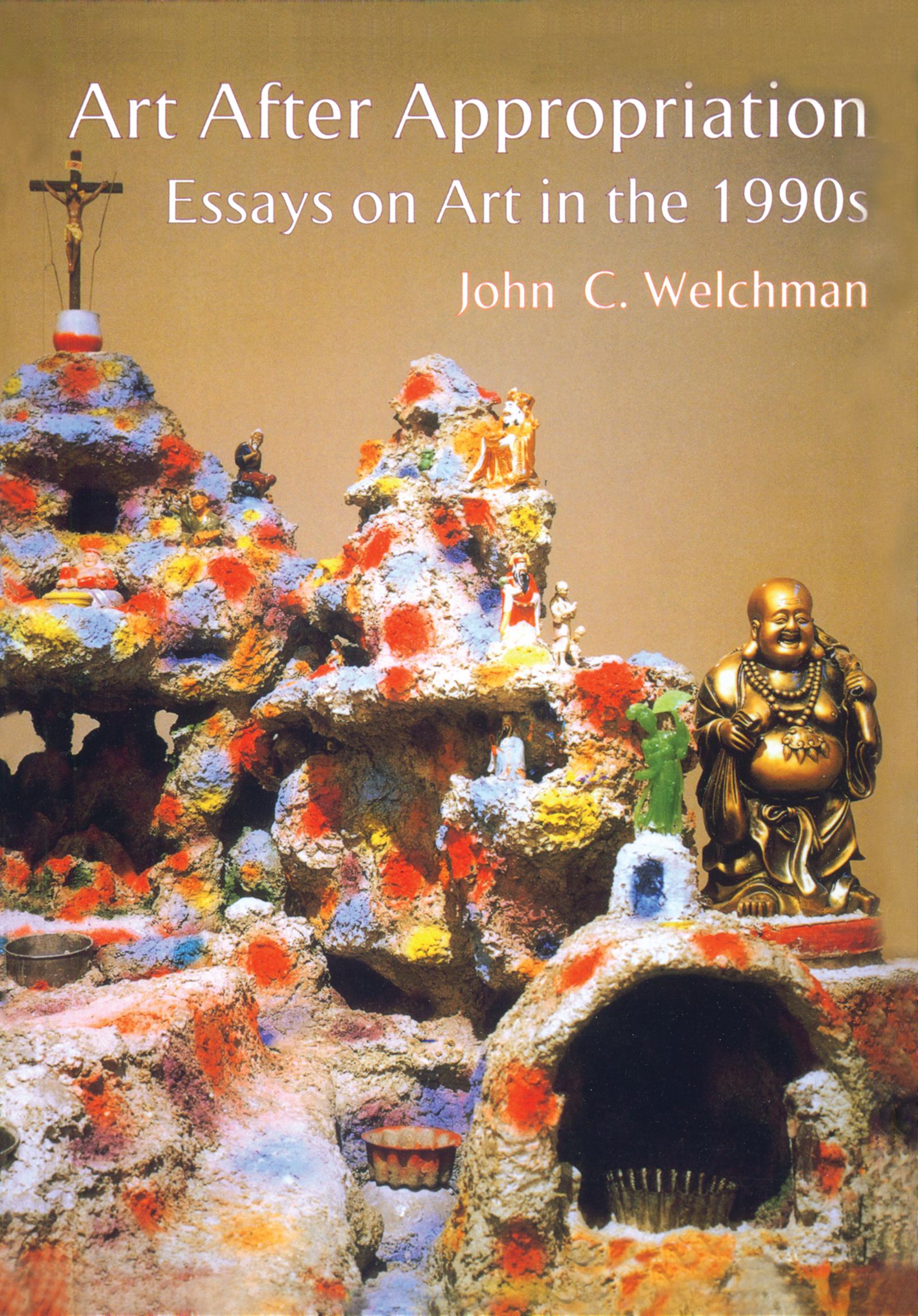
Beginning with the first comprehensive account of the discourse of appropriation that dominated the art world in the late 1970s and 1980s, Art After Appropriation suggests a matrix of inflections and refusals around the culture of taking or citation, each chapter loosely correlated with one year of the decade between 1989 and 1999. The opening chapters show how the Second World culture of the USSR gave rise to a new visibility for photography during the dissolution of the Soviet Union around 1989. Welchman examines how genres of ethnography, documentary and travel are crossed with fictive performance and social improvisation in the videos of Steve Fagin. He discusses how hybrid forms of subjectivity are delivered by a new critical narcissism, and how the Korean-American artist, Cody Choi converts diffident gestures of appropriation from the logic of material or stylistic annexation into continuous incorporated events. Art After Appropriation also examines the creation of public art from covert actions and social feedback, and how bodies participate in their own appropriation. Art After Appropriation concludes with the advent of the rainbow net, an imaginary icon that governs the spaces of interactivity, proliferation and media piracy at the end of the millennium.
John Welchman is Professor of Modern Art History, Theory and Criticism at the University of California, San Diego. He is the author of Modernism Relocated (1995) and Invisible Colors (1997); and editor of Rethinking Borders (1996), and a forthcoming three-volume anthology of the writings of LA artist MIke Kelley. Welchman has contributed to numerous journals, magazines, museum catalogues and newspapers, including Artforum; New York Times; Los Angeles Times; International Herald Tribune; Los Angeles County Museum of Art; Tate Gallery; Museum of Contemporary Art, Los Angeles; Reina Sofia, Madrid; Haus der Kunst, Munich
Betal nemt med kort, Klarna, Apple Pay eller Google Pay. Ikke tilfreds? Du har altid 14 dages fortrydelsesret. Læs mere i vores vilkår. Har du spørgsmål, så send os en mail på hello@memmo.org.
Memmo gør det nemmere at studere – uanset hvor du er i verden. Hos os samler du dine kursusbøger og smarte studieværktøjer ét sted: resuméer, quizzer, podcasts og flashcards. Og så er der Ted, din studieven, der svarer på alt, du undrer dig over. Over 50 000 studerende studerer allerede her – bygget til at hjælpe dig med at lære hurtigere og stresse mindre.