
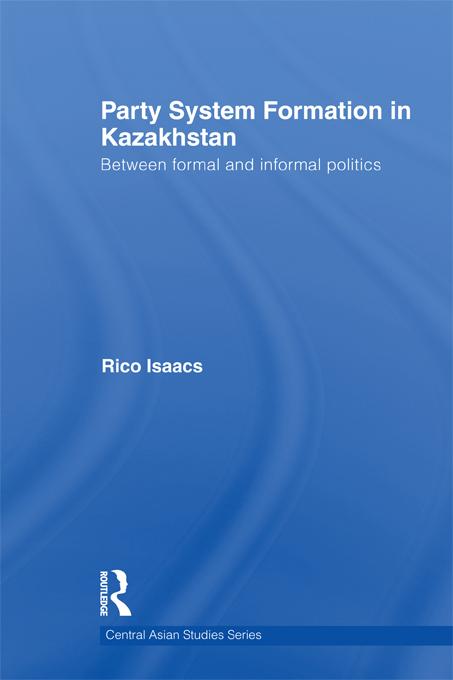
Since the collapse of the Soviet Union, Central Asian states have developed liberal-constitutional formal institutions. However, at the same time, political phenomena in Central Asia are shaped by informal political behaviour and relations. This relationship is now a critical issue affecting democratization and regime consolidation processes in former Soviet Central Asia, and this book provides an account of the interactive and dynamic relationship between informal and formal politics through the case of party-system formation in Kazakhstan.
Based on extensive interviews with political actors and a wide range of historical and contemporary documentary sources, the book utilises and develops neopatrimonialism as an analytical concept for studying post-Soviet authoritarian consolidation and failed democratisation. It illustrates how personalism of political office, patronage and patron-client networks and factional elite conflict have influenced and shaped the institutional constraints affecting party development, the type of emerging parties and parties’ relationship with society. The case of Kazakhstan, however, also demonstrates how in the former Soviet space political parties emerge as central to the legitimization of informal political behavior, the structuring of factional competition and the consolidation of authoritarianism. The book represents an important contribution to the study of Central Asian Politics.
Betal nemt med kort, Klarna, Apple Pay eller Google Pay. Ikke tilfreds? Du har altid 14 dages fortrydelsesret. Læs mere i vores vilkår. Har du spørgsmål, så send os en mail på hello@memmo.org.
Memmo gør det nemmere at studere – uanset hvor du er i verden. Hos os samler du dine kursusbøger og smarte studieværktøjer ét sted: resuméer, quizzer, podcasts og flashcards. Og så er der Ted, din studieven, der svarer på alt, du undrer dig over. Over 50 000 studerende studerer allerede her – bygget til at hjælpe dig med at lære hurtigere og stresse mindre.