
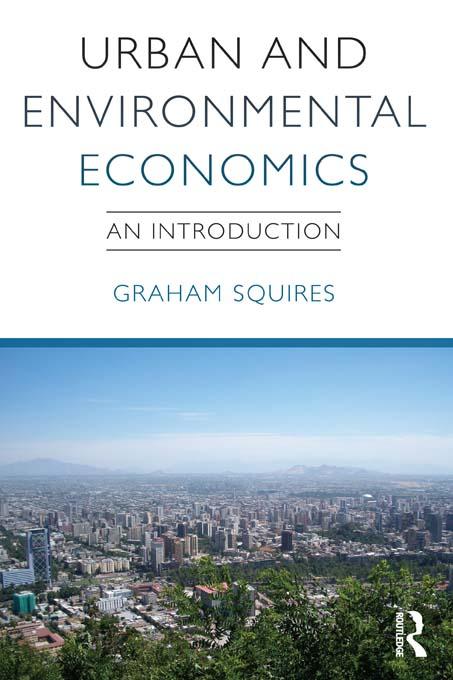
The importance of the built environment to environmental protection is well established, with strict environmental regulations now a feature of the working lives of planners, contractors, building designers, and quantity surveyors alike. Those new to, or preparing to join this industry must have an understanding of how their environmental responsibilities relate to their professional responsibilities in economic terms.
Designed as an introductory textbook, Urban and Environmental Economics: An Introduction provides the background information from these disciplines to understand crucial tools and economic techniques. A broad range of theories of the natural and built environments and economics are explained, helping the reader develop a real understanding of the topics that influence this subject, such as:
- the history of economic thought on the built environment
- the economics of shared space in the built environment
- cost-benefit analysis and discounting
- macro-economic tools, measures, and policy
- sustainable development
- resource valuation.
Illustrated throughout, and with lists of further reading in every chapter, this book is ideal for students at all levels who need to get to grips with the economics of the environment within a built environment context. Particularly useful to those studying planning, land economy, environmental management, or housing development.
Betal nemt med kort, Klarna, Apple Pay eller Google Pay. Ikke tilfreds? Du har altid 14 dages fortrydelsesret. Læs mere i vores vilkår. Har du spørgsmål, så send os en mail på hello@memmo.org.
Memmo gør det nemmere at studere – uanset hvor du er i verden. Hos os samler du dine kursusbøger og smarte studieværktøjer ét sted: resuméer, quizzer, podcasts og flashcards. Og så er der Ted, din studieven, der svarer på alt, du undrer dig over. Over 50 000 studerende studerer allerede her – bygget til at hjælpe dig med at lære hurtigere og stresse mindre.