
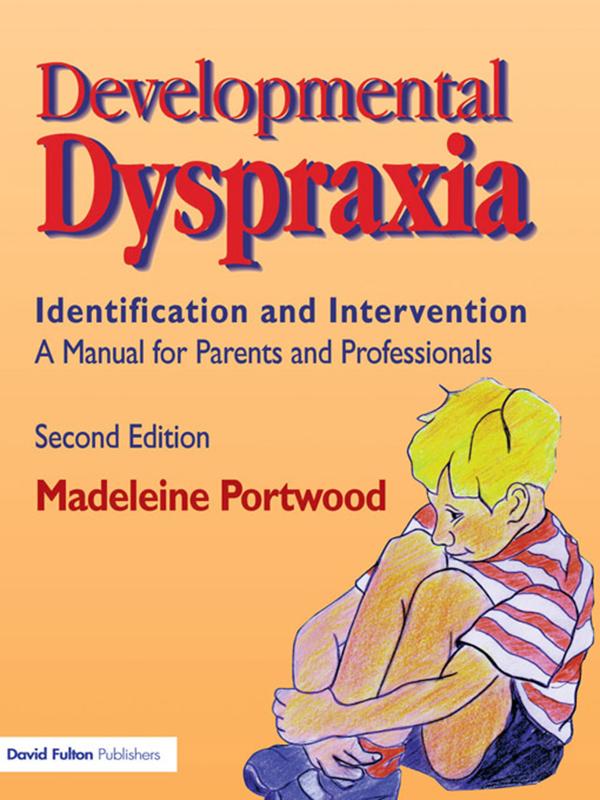
First published in 2007. Research suggests that between five and ten per cent of all children are dyspraxic. There is much debate about the nature of this disorder and many undiagnosed youngsters are denied access to treatment programmes. In most areas specialist provision is a scarce resource and support, when available, is delivered through parents and teachers. This second edition of Madeleine Portwood's successful manual aims to give parents, teachers and health professionals the confidence to diagnose and assess dyspraxia. Most importantly. it offers them an intervention programme which will significantly improve the cognitive functioning of the dyspraxic child or teenager. Updated in light of the author's new and extensive research, the book provides the reader with: background information on the neurological basis of the condition; strategies for identification/diagnosis and assessment; proven programmes of intervention which can be monitored by anyone closely involved with the child; strategies to improve curricular attainments; remediation activities to develop perceptual and motor skills; programmes to develop self-esteem information about where to find help
Betal nemt med kort, Klarna, Apple Pay eller Google Pay. Ikke tilfreds? Du har altid 14 dages fortrydelsesret. Læs mere i vores vilkår. Har du spørgsmål, så send os en mail på hello@memmo.org.
Memmo gør det nemmere at studere – uanset hvor du er i verden. Hos os samler du dine kursusbøger og smarte studieværktøjer ét sted: resuméer, quizzer, podcasts og flashcards. Og så er der Ted, din studieven, der svarer på alt, du undrer dig over. Over 50 000 studerende studerer allerede her – bygget til at hjælpe dig med at lære hurtigere og stresse mindre.
Du kan måske også lide
Køb bogen0