
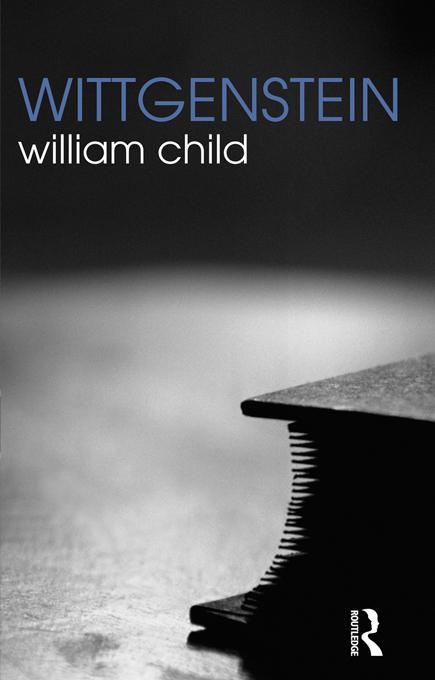
Ludwig Wittgenstein (1889-1951) is considered by most philosophers - even those who do not share his views - to be the most influential philosopher of the 20th century. His contributions to the philosophy of language, mind, meaning and psychology - as well as to logic, mathematics and epistemology - permanently altered the philosophical landscape, and his Tractatus Logico Philosophicus and Philosophical Investigations continue to be studied in philosophy departments around in the world. In this superb introduction and overview of Wittgenstein’s life and work, William Child discusses:
- Wittgenstein’s early work, Tractatus Logico-Philosophicus, including his account of language and thought
- Wittgenstein’s subsequent rejection of some of the central doctrines of the Tractatus
- Wittgenstein’s later philosophy
- intentionality and rule-following
- philosophy of mind and psychology in Philosophical Investigations
- knowledge and certainty, and Wittgenstein’s final work
- philosophy of religion
- the legacy and influence of Wittgenstein’s ideas in philosophy, and beyond.
Including a chronology, glossary, and helpful conclusions to each chapter, Wittgenstein is essential reading for anyone coming to Wittgenstein's philosophy for the first time.
Betal nemt med kort, Klarna, Apple Pay eller Google Pay. Ikke tilfreds? Du har altid 14 dages fortrydelsesret. Læs mere i vores vilkår. Har du spørgsmål, så send os en mail på hello@memmo.org.
Memmo gør det nemmere at studere – uanset hvor du er i verden. Hos os samler du dine kursusbøger og smarte studieværktøjer ét sted: resuméer, quizzer, podcasts og flashcards. Og så er der Ted, din studieven, der svarer på alt, du undrer dig over. Over 50 000 studerende studerer allerede her – bygget til at hjælpe dig med at lære hurtigere og stresse mindre.