
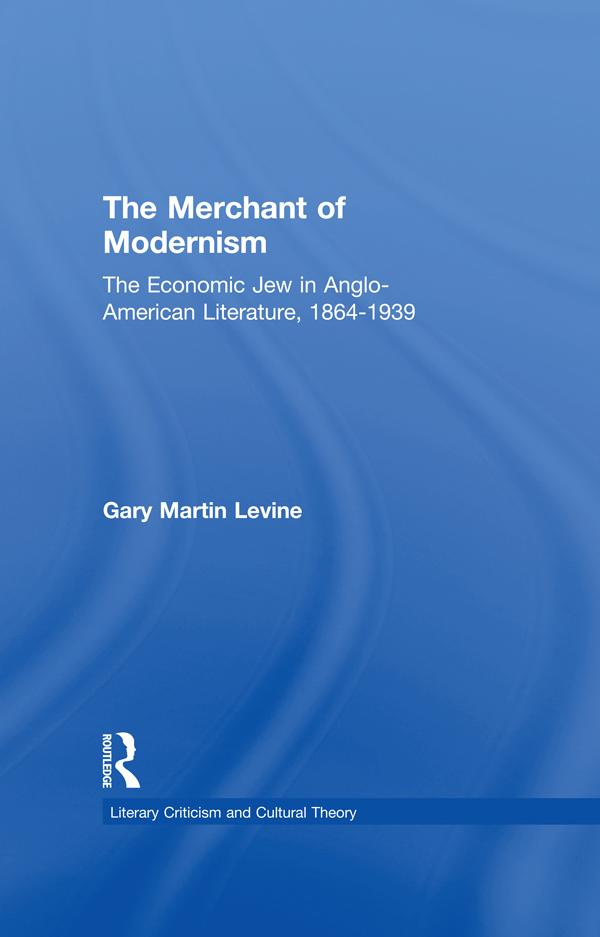
The Merchant of Modernism examines how the figure of the economic Jew symbolizes the struggle of authors from Dickens to Pound to reconcile their critique of capitalism with their own literary practices and how the shifting of the representations of this figure parallels the development of literary Modernism. From the sudden rise of the Victorian stock market to the Great Depression, the prominence of economic Jews in the writings of Charles Dickens, George Eliot, Edith Wharton, Frank Norris, Mark Twain, Henry James, Abraham Cahan, F. Scott Fitzgerald, Ernest Hemingway, Willa Cather, T.S. Eliot, D.H. Lawrence, Wyndham Lewis, Ezra Pound, and James Joyce documents major shifts and events in capitalism, their impact on literature, and advances in economic thought. The Merchant of Modernism provides a sophisticated analysis of the role of economic history and economic thought in shaping both literary Modernism and modern anti-Semitism.
Betal nemt med kort, Klarna, Apple Pay eller Google Pay. Ikke tilfreds? Du har altid 14 dages fortrydelsesret. Læs mere i vores vilkår. Har du spørgsmål, så send os en mail på hello@memmo.org.
Memmo gør det nemmere at studere – uanset hvor du er i verden. Hos os samler du dine kursusbøger og smarte studieværktøjer ét sted: resuméer, quizzer, podcasts og flashcards. Og så er der Ted, din studieven, der svarer på alt, du undrer dig over. Over 50 000 studerende studerer allerede her – bygget til at hjælpe dig med at lære hurtigere og stresse mindre.