
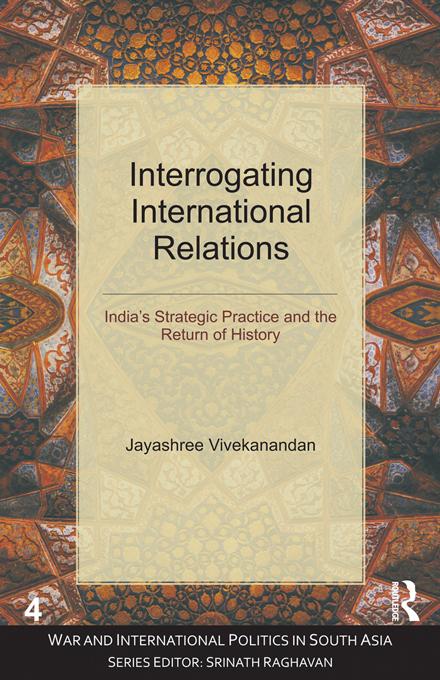
The book interrogates the disciplinary biases and firewalls that inform mainstream international relations today, and problematises the several tropes that have come to typify the strategic histories of post-colonial societies such as India. Questioning a range of long-held cultural representations on India, the book challenges such portrayals and underscores the centrality of context and contingency in any cultural explanation of state behaviour. It argues for a historico-cultural understanding of power and critiques IR’s tendency to usher in a selective ‘return of history’.
Taking two contrasting case studies from medieval Indian history, the book assesses the success and failure of the grand strategy pursued by the Mughal empire under Akbar. The study emphasises his grand strategy of accommodation, defined by the interplay of critical variables such as distance and the vast military labour market. The book also looks at his conscious attempt to indigenise power by projecting himself as the personification of the ideal Hindu king. This case study helps to contextualise the many critical transitions that occurred in international relations: from medieval empires to the modern state system, and from an indigenised, experiential understanding of power to its absolute, abstract manifestations in the colonial state.
Betal nemt med kort, Klarna, Apple Pay eller Google Pay. Ikke tilfreds? Du har altid 14 dages fortrydelsesret. Læs mere i vores vilkår. Har du spørgsmål, så send os en mail på hello@memmo.org.
Memmo gør det nemmere at studere – uanset hvor du er i verden. Hos os samler du dine kursusbøger og smarte studieværktøjer ét sted: resuméer, quizzer, podcasts og flashcards. Og så er der Ted, din studieven, der svarer på alt, du undrer dig over. Over 50 000 studerende studerer allerede her – bygget til at hjælpe dig med at lære hurtigere og stresse mindre.