
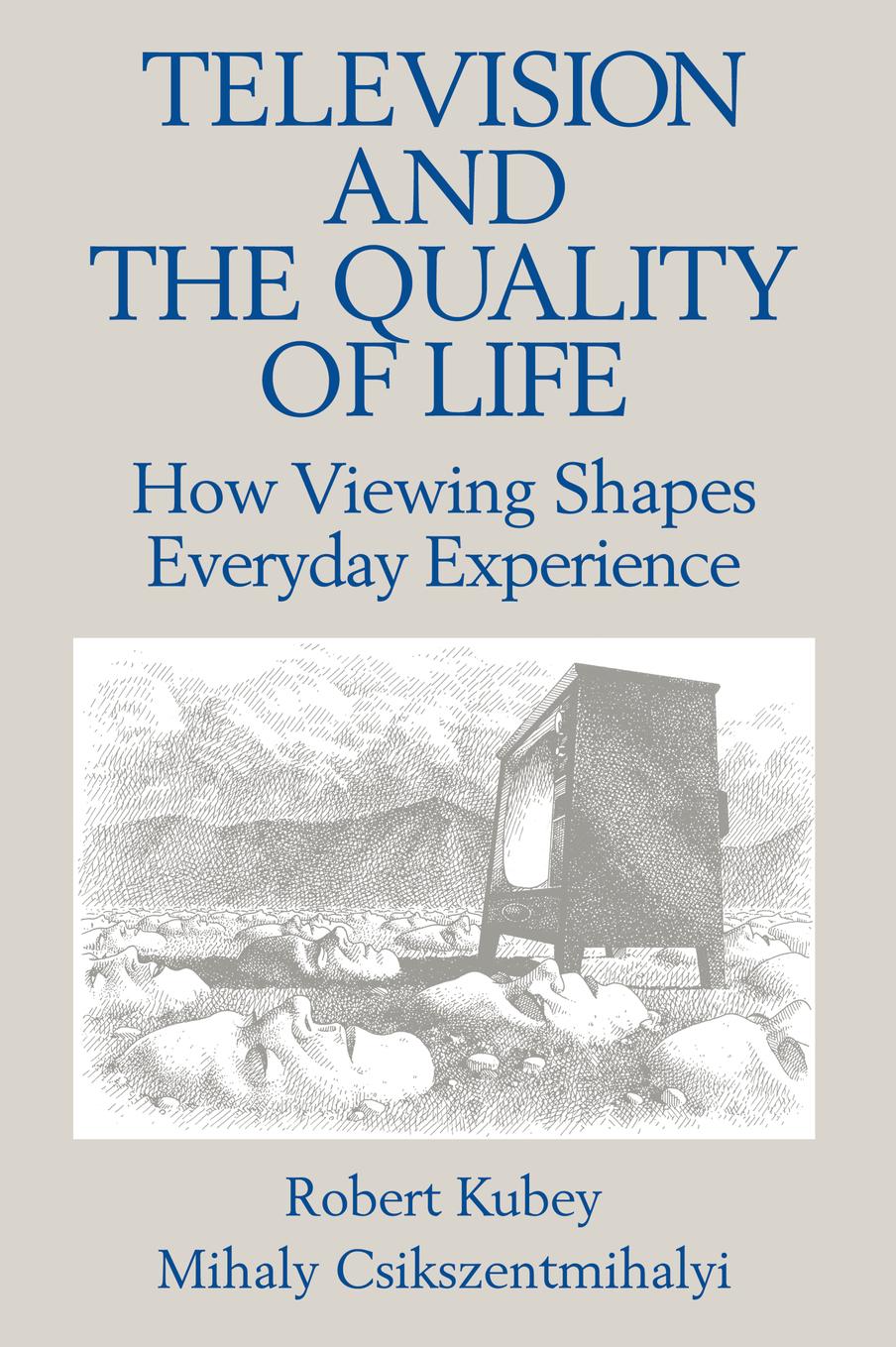
Employing a unique research methodology that enables people to report on their normal activities as they occur, the authors examine how people actually use and experience television -- and how television viewing both contributes to and detracts from the quality of everyday life. Studied within the natural context of everyday living, and drawing comparisons between television viewing and a variety of other daily activities and leisure pursuits, this unusual book explores whether television is a boon or a detriment to family life; how people feel and think before, during, and after television viewing; what causes television habits to develop; and what causes heavy viewing -- and what heavy viewing causes -- in the short and long term.
Television and the Quality of Life also compares the viewing experience cross-nationally using samples from the United States, Italy, Canada, and Germany -- and then interprets the findings within a broad theoretical and historical framework that considers how information use and daily activity contribute to individual, familial, societal, and cultural development.
Betal nemt med kort, Klarna, Apple Pay eller Google Pay. Ikke tilfreds? Du har altid 14 dages fortrydelsesret. Læs mere i vores vilkår. Har du spørgsmål, så send os en mail på hello@memmo.org.
Memmo gør det nemmere at studere – uanset hvor du er i verden. Hos os samler du dine kursusbøger og smarte studieværktøjer ét sted: resuméer, quizzer, podcasts og flashcards. Og så er der Ted, din studieven, der svarer på alt, du undrer dig over. Over 50 000 studerende studerer allerede her – bygget til at hjælpe dig med at lære hurtigere og stresse mindre.