
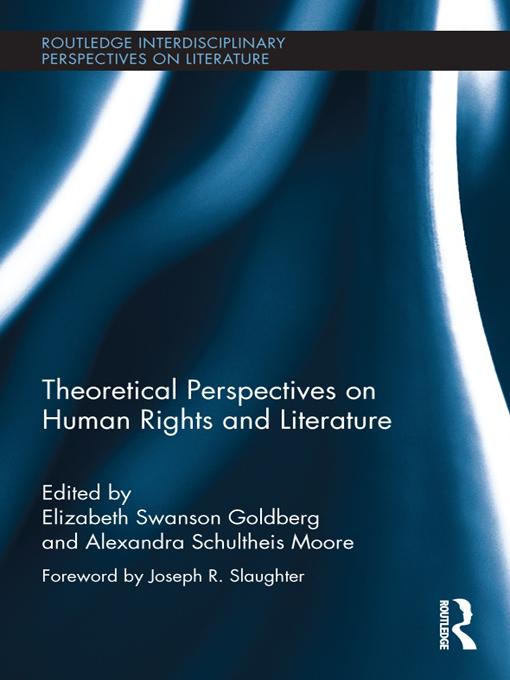
What can literary theory reveal about discourses and practices of human rights, and how can human rights frameworks help to make sense of literature? How have human rights concerns shaped the literary marketplace, and how can literature impact human rights concerns? Essays in this volume theorize how both literature and reading literarily can shape understanding of human rights in productive ways. Contributors to Theoretical Perspectives on Human Rights and Literature provide a shared history of modern literature and rights; theorize how trauma, ethics, subjectivity, and witnessing shape representations of human rights violations and claims in literary texts across a range of genres (including poetry, the novel, graphic narrative, short story, testimonial, and religious fables); and consider a range of civil, political, social, economic, and cultural rights and their representations. The authors reflect on the imperial and colonial histories of human rights as well as the cynical mobilization of human rights discourses in the name of war, violence, and repression; at the same time, they take seriously Gayatri Spivak’s exhortation that human rights is something that we "cannot not want," exploring the central function of storytelling at the heart of all human rights claims, discourses, and policies.
Betal nemt med kort, Klarna, Apple Pay eller Google Pay. Ikke tilfreds? Du har altid 14 dages fortrydelsesret. Læs mere i vores vilkår. Har du spørgsmål, så send os en mail på hello@memmo.org.
Memmo gør det nemmere at studere – uanset hvor du er i verden. Hos os samler du dine kursusbøger og smarte studieværktøjer ét sted: resuméer, quizzer, podcasts og flashcards. Og så er der Ted, din studieven, der svarer på alt, du undrer dig over. Over 50 000 studerende studerer allerede her – bygget til at hjælpe dig med at lære hurtigere og stresse mindre.