
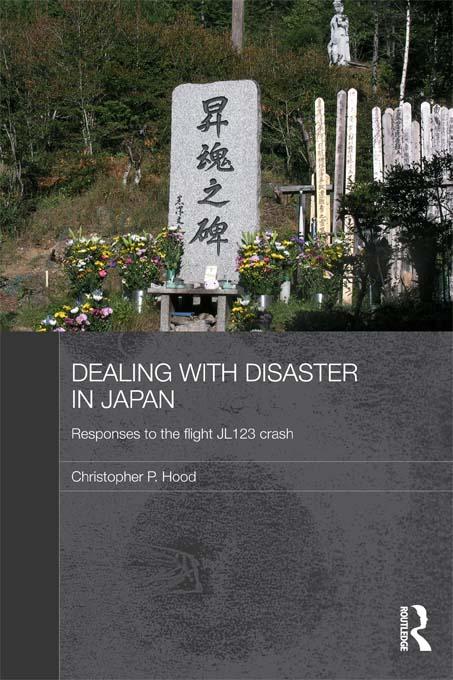
Just as the sinking of the Titanic is embedded in the public consciousness in the English-speaking world, so the crash of JAL flight JL123 is part of the Japanese collective memory. The 1985 crash involved the largest loss of life for any single air crash in the world. 520 people, many of whom had been returning to their ancestral home for the Obon religious festival, were killed; there were only four survivors.
This book tells the story of the crash, discusses the many controversial issues surrounding it, and considers why it has come to have such importance for many Japanese. It shows how the Japanese responded to the disaster: trying to comprehend how a faulty repair may have caused the crash, and the fact that rescue services took such a long time to reach the remote crash site; how the bereaved dealt with their loss; how the media in Japan and in the wider world reported the disaster; and how the disaster is remembered and commemorated. The book highlights the media coverage of anniversary events and the Japanese books and films about the crash; the very particular memorialization process in Japan, alongside Japanese attitudes to death and religion; it points out in what ways this crash both reflects typical Japanese behaviour and in what ways the crash is unique.
Betal nemt med kort, Klarna, Apple Pay eller Google Pay. Ikke tilfreds? Du har altid 14 dages fortrydelsesret. Læs mere i vores vilkår. Har du spørgsmål, så send os en mail på hello@memmo.org.
Memmo gør det nemmere at studere – uanset hvor du er i verden. Hos os samler du dine kursusbøger og smarte studieværktøjer ét sted: resuméer, quizzer, podcasts og flashcards. Og så er der Ted, din studieven, der svarer på alt, du undrer dig over. Over 50 000 studerende studerer allerede her – bygget til at hjælpe dig med at lære hurtigere og stresse mindre.