
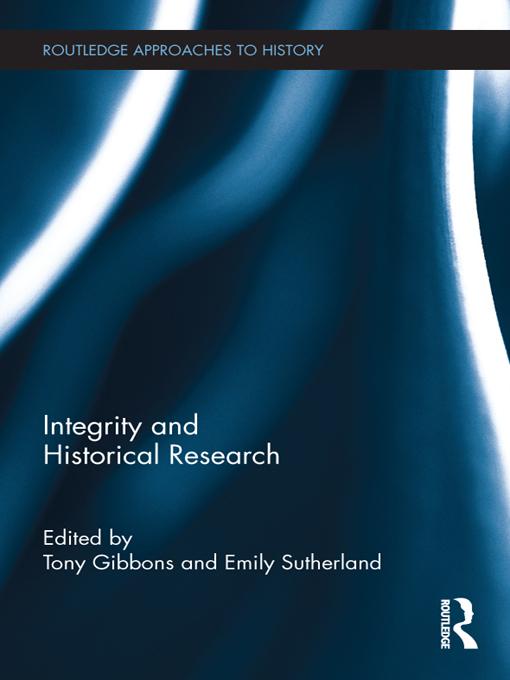
There have been serious debates between historians, novelists and filmmakers as to how best present historical narratives. When writers and filmmakers talk of using historical research with integrity, what exactly do they mean? Integrity and Historical Research examines this question in detail. The first chapter discusses the concept of integrity. The chapters that follow reflect on this philosophical treatment in the light of fiction and film that deals with history in a number of ways. How should writers and filmmakers use lives? Can, and may, people who are now dead and who may have lived long ago, be defamed?
The authors include academics, historians, social historians, medievalists, oral historians, literary theorists, historical novelists and script writers. They examine the theoretical influences and practical choices that involve and concern writers and filmmakers who rely on historical research. The desire to be accurate may often conflict with the need to produce a work that goes beyond the mere depiction of events in order to excite the interest of readers and to hold that interest. At the same time there is a developing emphasis on historians, to write well in clear, accessible prose, which may involve using the novelists’ techniques. How much license may be given to writers of fiction and filmmakers in their depiction of historical characters and events? This book begins to answer this question, while inviting further discussion.
Betal nemt med kort, Klarna, Apple Pay eller Google Pay. Ikke tilfreds? Du har altid 14 dages fortrydelsesret. Læs mere i vores vilkår. Har du spørgsmål, så send os en mail på hello@memmo.org.
Memmo gør det nemmere at studere – uanset hvor du er i verden. Hos os samler du dine kursusbøger og smarte studieværktøjer ét sted: resuméer, quizzer, podcasts og flashcards. Og så er der Ted, din studieven, der svarer på alt, du undrer dig over. Over 50 000 studerende studerer allerede her – bygget til at hjælpe dig med at lære hurtigere og stresse mindre.