
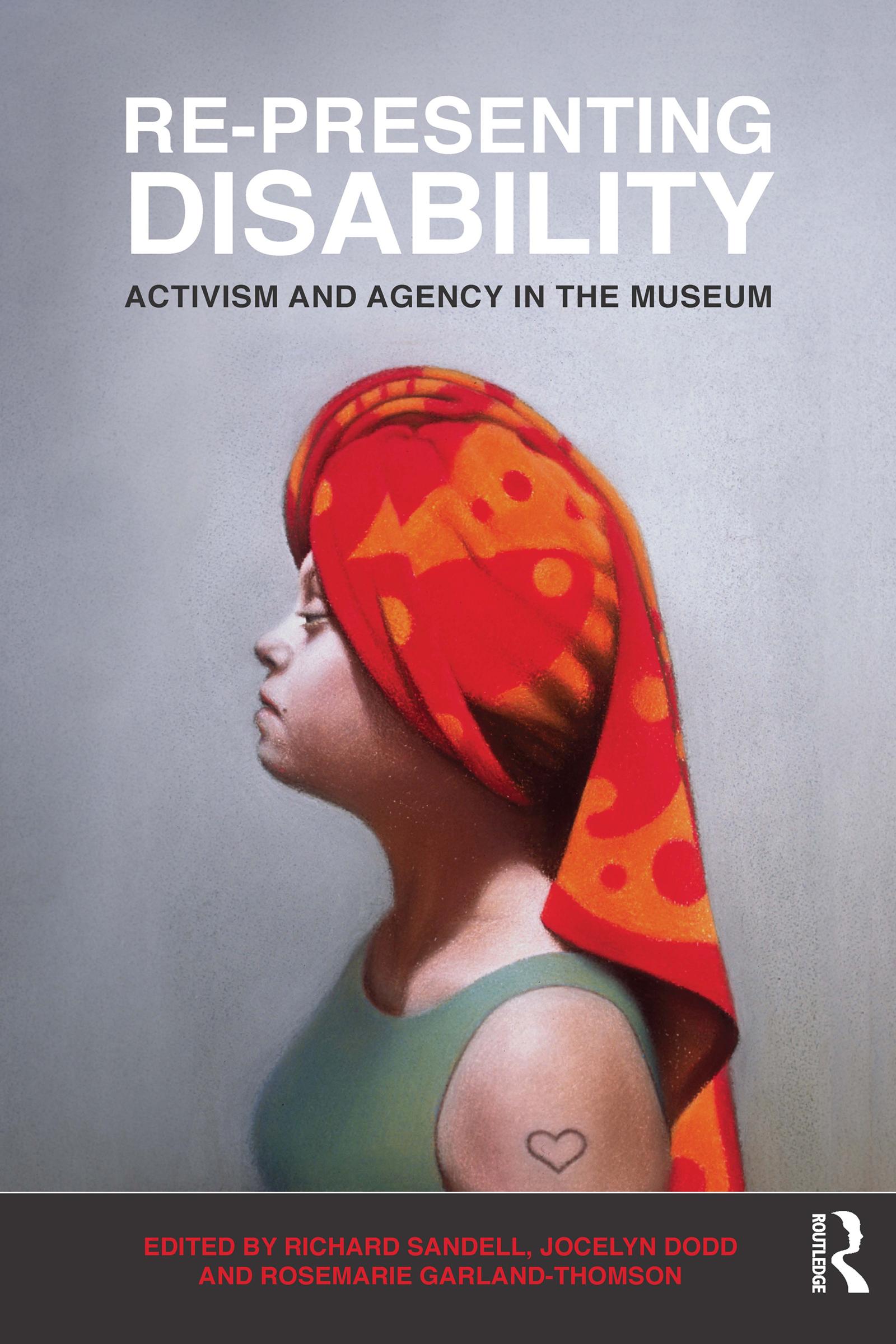
Re-Presenting Disability addresses issues surrounding disability representation in museums and galleries, a topic which is receiving much academic attention and is becoming an increasingly pressing issue for practitioners working in wide-ranging museums and related cultural organisations.
This volume of provocative and timely contributions, brings together twenty researchers, practitioners and academics from different disciplinary, institutional and cultural contexts to explore issues surrounding the cultural representation of disabled people and, more particularly, the inclusion (as well as the marked absence) of disability-related narratives in museum and gallery displays. The diverse perspectives featured in the book offer fresh ways of interrogating and understanding contemporary representational practices as well as illuminating existing, related debates concerning identity politics, social agency and organisational purposes and responsibilities, which have considerable currency within museums and museum studies.
Re-Presenting Disability explores such issues as:
- In what ways have disabled people and disability-related topics historically been represented in the collections and displays of museums and galleries? How can newly emerging representational forms and practices be viewed in relation to these historical approaches?
- How do emerging trends in museum practice – designed to counter prejudiced, stereotypical representations of disabled people – relate to broader developments in disability rights, debates in disability studies, as well as shifting interpretive practices in public history and mass media?
- What approaches can be deployed to mine and interrogate existing collections in order to investigate histories of disability and disabled people and to identify material evidence that might be marshalled to play a part in countering prejudice? What are the implications of these developments for contemporary collecting?
- How might such purposive displays be created and what dilemmas and challenges are curators, educators, designers and other actors in the exhibition-making process, likely to encounter along the way?
- How do audiences – disabled and non-disabled – respond to and engage with interpretive interventions designed to confront, undercut or reshape dominant regimes of representation that underpin and inform contemporary attitudes to disability?
Betal nemt med kort, Klarna, Apple Pay eller Google Pay. Ikke tilfreds? Du har altid 14 dages fortrydelsesret. Læs mere i vores vilkår. Har du spørgsmål, så send os en mail på hello@memmo.org.
Memmo gør det nemmere at studere – uanset hvor du er i verden. Hos os samler du dine kursusbøger og smarte studieværktøjer ét sted: resuméer, quizzer, podcasts og flashcards. Og så er der Ted, din studieven, der svarer på alt, du undrer dig over. Over 50 000 studerende studerer allerede her – bygget til at hjælpe dig med at lære hurtigere og stresse mindre.