
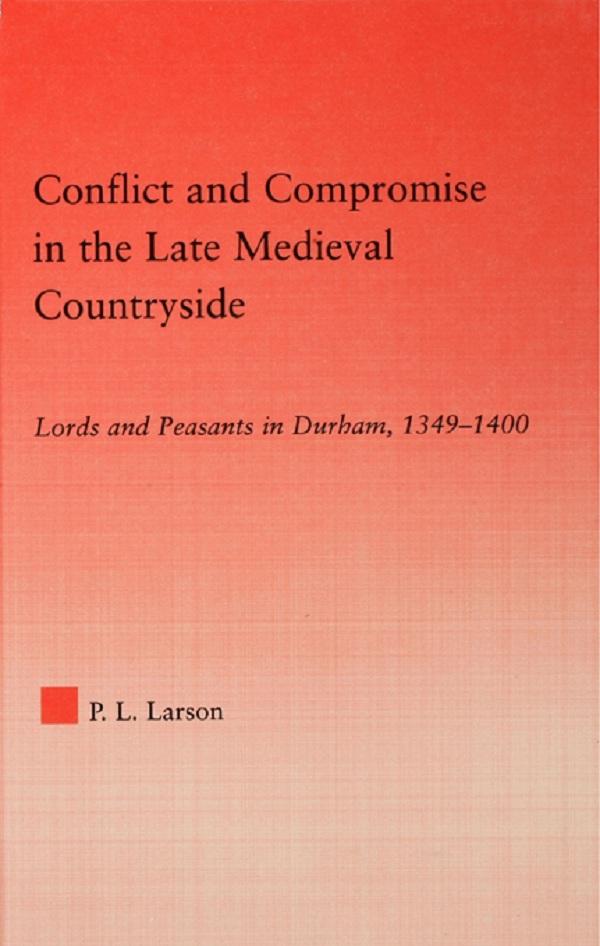
Larson examines the changing relations between lords and peasants in post-Black Death Durham. This was a time period of upheaval and change, part of the transition from ‘medieval’ to ‘modern.’ Many historians have argued about the nature of this change and its causes, often putting forth a single all-encompassing model; Larson presses for the importance of individual choice and action, resulting in a flexible, human framework that provides a more appropriate explanation for the many paths followed in this period.
The theoretical side is balanced by an ‘on the ground’ examination of rural life in Durham-- an attempt to capture the raw emotions and decisions of the period. No one has really examined this; most studies are speculative, relying on theory or statistics, rather than tracing the history of real people, both in the immediate aftermath of the plague, and in the longer term. Durham is fortunate in that records survive in abundance for this period; most other studies of rural society end at 1300 or 1348.
As such, this book fills a major gap in medieval English history while at the same time grappling with major theories of change for this transformative period.
Betal nemt med kort, Klarna, Apple Pay eller Google Pay. Ikke tilfreds? Du har altid 14 dages fortrydelsesret. Læs mere i vores vilkår. Har du spørgsmål, så send os en mail på hello@memmo.org.
Memmo gør det nemmere at studere – uanset hvor du er i verden. Hos os samler du dine kursusbøger og smarte studieværktøjer ét sted: resuméer, quizzer, podcasts og flashcards. Og så er der Ted, din studieven, der svarer på alt, du undrer dig over. Over 50 000 studerende studerer allerede her – bygget til at hjælpe dig med at lære hurtigere og stresse mindre.