
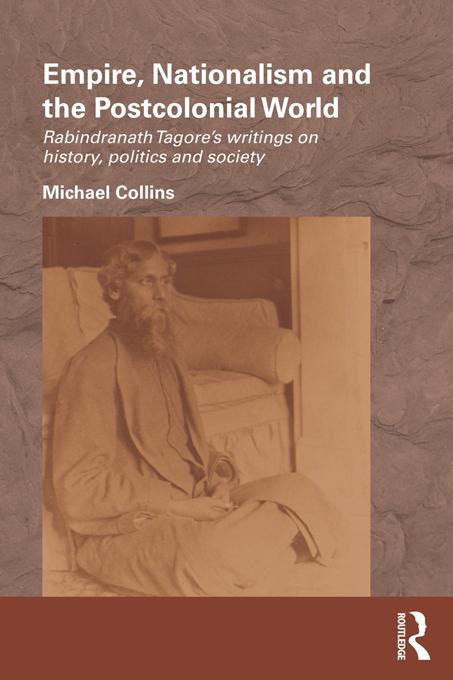
By presenting a new interpretation of Rabindranath Tagore’s English language writings, this book places the work of India’s greatest Nobel Prize winner and cultural icon in the context of imperial history and thereby bridges the gap between Tagore studies and imperial/postcolonial historiography.
Using detailed archival research, the book charts the origins of Tagore’s ideas in Indian religious traditions and discusses the impact of early Indian nationalism on Tagore’s thinking. It offers a new interpretation of Tagore’s complex debates with Gandhi about the colonial encounter, Tagore’s provocative analysis of the impact of British imperialism in India and his questioning of nationalism as a pathway to authentic postcolonial freedom. The book also demonstrates how the man and his ideas were received and interpreted in Britain during his lifetime and how they have been sometimes misrepresented by nationalist historians and postcolonial theorists after Tagore’s death.
An alternative interpretation based on an intellectual history approach, this book places Tagore’s sense of agency, his ideas and intentions within a broader historical framework. Offering an exciting critique of postcolonial theory from a historical perspective, it is a timely contribution in the wake of the 150th anniversary of Tagore's birth in 2011.
Betal nemt med kort, Klarna, Apple Pay eller Google Pay. Ikke tilfreds? Du har altid 14 dages fortrydelsesret. Læs mere i vores vilkår. Har du spørgsmål, så send os en mail på hello@memmo.org.
Memmo gør det nemmere at studere – uanset hvor du er i verden. Hos os samler du dine kursusbøger og smarte studieværktøjer ét sted: resuméer, quizzer, podcasts og flashcards. Og så er der Ted, din studieven, der svarer på alt, du undrer dig over. Over 50 000 studerende studerer allerede her – bygget til at hjælpe dig med at lære hurtigere og stresse mindre.