
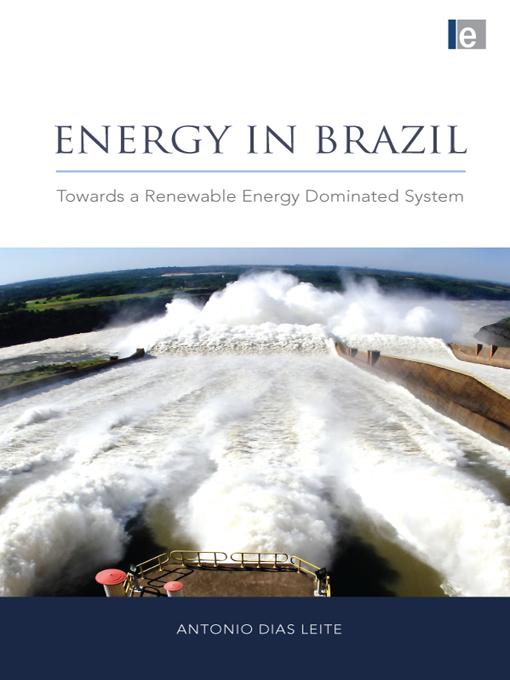
Rapidly developing countries such as China and India are the real main players in the climate debate, with the potential for massive increases in their carbon emissions in coming years. Brazil is often included in their number, yet this country is in fact notable for its exceptionally high reliance on energy from renewable sources - approaching 50%. However, the fact that much of this energy comes from hydropower and biofuels, and recent discoveries of massive oil reserves off of the Brazilian coast, are a recipe for controversy.
In this detailed account, Antonio Dias Leite sets out the development of Brazil's energy mix. Beginning with the history of energy provision and use, he then moves on to tackle the various sources in detail: hydropower, biomass and other renewables, as well as fossil fuels and nuclear power. In each case he examines growth, distribution, environmental and socio-economic issues (such as deforestation and displacement of indigenous communities) and potential for future development - highlighting what has worked, and what hasn't. The book ends by examining Brazilian approaches to energy efficiency, and by positioning Brazil in the world context.
This is a major contribution to the discussion around climate change mitigation that will be key reading for policymakers and researchers concerned with the future role and impacts of rapidly developing countries.
Betal nemt med kort, Klarna, Apple Pay eller Google Pay. Ikke tilfreds? Du har altid 14 dages fortrydelsesret. Læs mere i vores vilkår. Har du spørgsmål, så send os en mail på hello@memmo.org.
Memmo gør det nemmere at studere – uanset hvor du er i verden. Hos os samler du dine kursusbøger og smarte studieværktøjer ét sted: resuméer, quizzer, podcasts og flashcards. Og så er der Ted, din studieven, der svarer på alt, du undrer dig over. Over 50 000 studerende studerer allerede her – bygget til at hjælpe dig med at lære hurtigere og stresse mindre.