
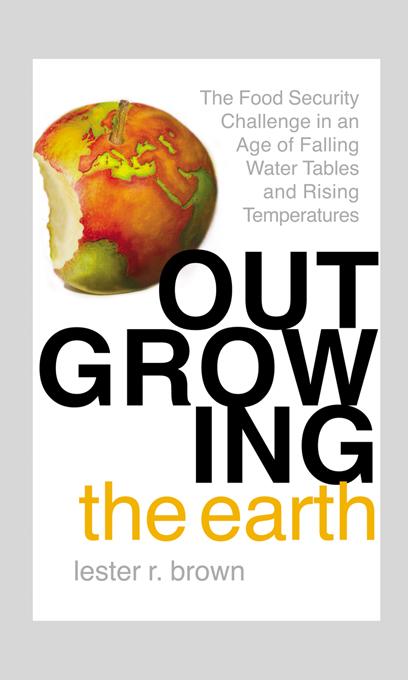
Historically, food security was the responsibility of ministries of agriculture but today that has changed: decisions made in ministries of energy may instead have the greatest effect on the food situation. Recent research reporting that a one degree Celsius rise in temperature can reduce grain yields by 10 per cent means that energy policy is now directly affecting crop production. Agriculture is a water-intensive activity and, while public attention has focused on oil depletion, it is aquifer depletion that poses the more serious threat. There are substitutes for oil, but none for water and the link between our fossil fuel addiction, climate change and food security is now clear.
While population growth has slowed over the past three decades, we are still adding 76 million people per year. In a world where the historical rise in land productivity has slowed by half since 1990, eradicating hunger may depend as much on family planners as on farmers. The bottom line is that future food security depends not only on efforts within agriculture but also on energy policies that stabilize climate, a worldwide effort to raise water productivity, the evolution of land-efficient transport systems, and population policies that seek a humane balance between population and food. Outgrowing the Earth advances our thinking on food security issues that the world will be wrestling with for years to come.
Betal nemt med kort, Klarna, Apple Pay eller Google Pay. Ikke tilfreds? Du har altid 14 dages fortrydelsesret. Læs mere i vores vilkår. Har du spørgsmål, så send os en mail på hello@memmo.org.
Memmo gør det nemmere at studere – uanset hvor du er i verden. Hos os samler du dine kursusbøger og smarte studieværktøjer ét sted: resuméer, quizzer, podcasts og flashcards. Og så er der Ted, din studieven, der svarer på alt, du undrer dig over. Over 50 000 studerende studerer allerede her – bygget til at hjælpe dig med at lære hurtigere og stresse mindre.