
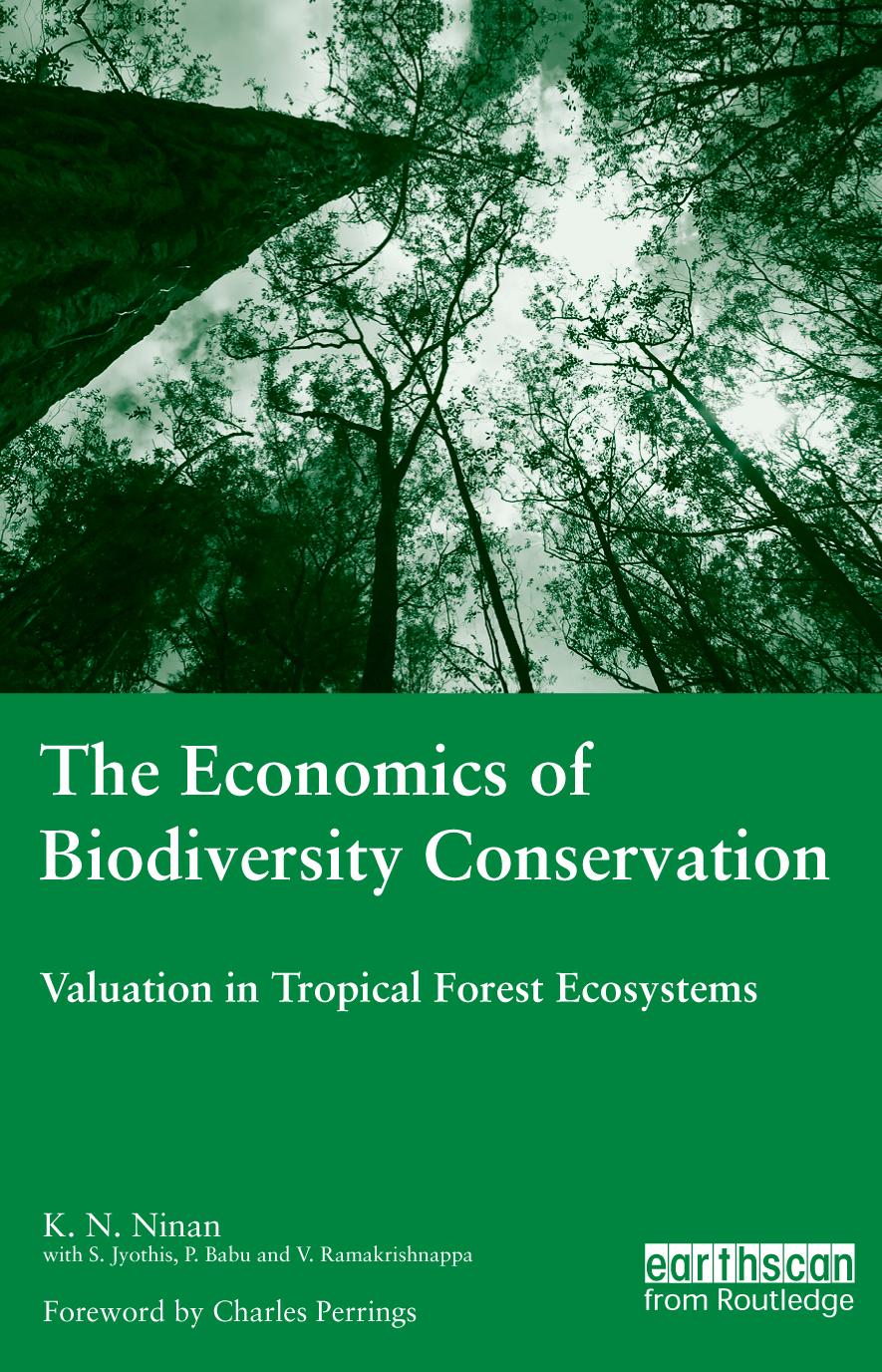
Economic valuation of biodiversity and ecosystem services is possibly the most powerful tool for halting the loss of biodiversity while maintaining incomes and livelihoods. Yet rarely have such approaches been applied to tropical forest ?hotspots?, which house the vast majority of the planets plant and animal species. This ground-breaking work is the most comprehensive and detailed examination of the economics of environmental valuation and biodiversity conservation to date.
Focusing on the Western Ghats of India, one of the top biodiversity hotspots in the world, this volume looks at a cross-section of local communities living within or near sanctuaries and reserve forests such as coffee growers, indigenous people and farmers-cum-pastoralists to assess the use and non-use values that people derive from tropical forests. It also looks at the extent of their dependence on forests for various goods and services, and examines their perceptions and attitudes towards biodiversity conservation and wildlife protection. The book concludes with an assessment of the institutional alternatives and policies for promoting biodiversity conservation through economic valuation methods.
Related titles
Economics for Collaborative Environmental Management (2005) 1-84407-095-6
Betal nemt med kort, Klarna, Apple Pay eller Google Pay. Ikke tilfreds? Du har altid 14 dages fortrydelsesret. Læs mere i vores vilkår. Har du spørgsmål, så send os en mail på hello@memmo.org.
Memmo gør det nemmere at studere – uanset hvor du er i verden. Hos os samler du dine kursusbøger og smarte studieværktøjer ét sted: resuméer, quizzer, podcasts og flashcards. Og så er der Ted, din studieven, der svarer på alt, du undrer dig over. Over 50 000 studerende studerer allerede her – bygget til at hjælpe dig med at lære hurtigere og stresse mindre.