
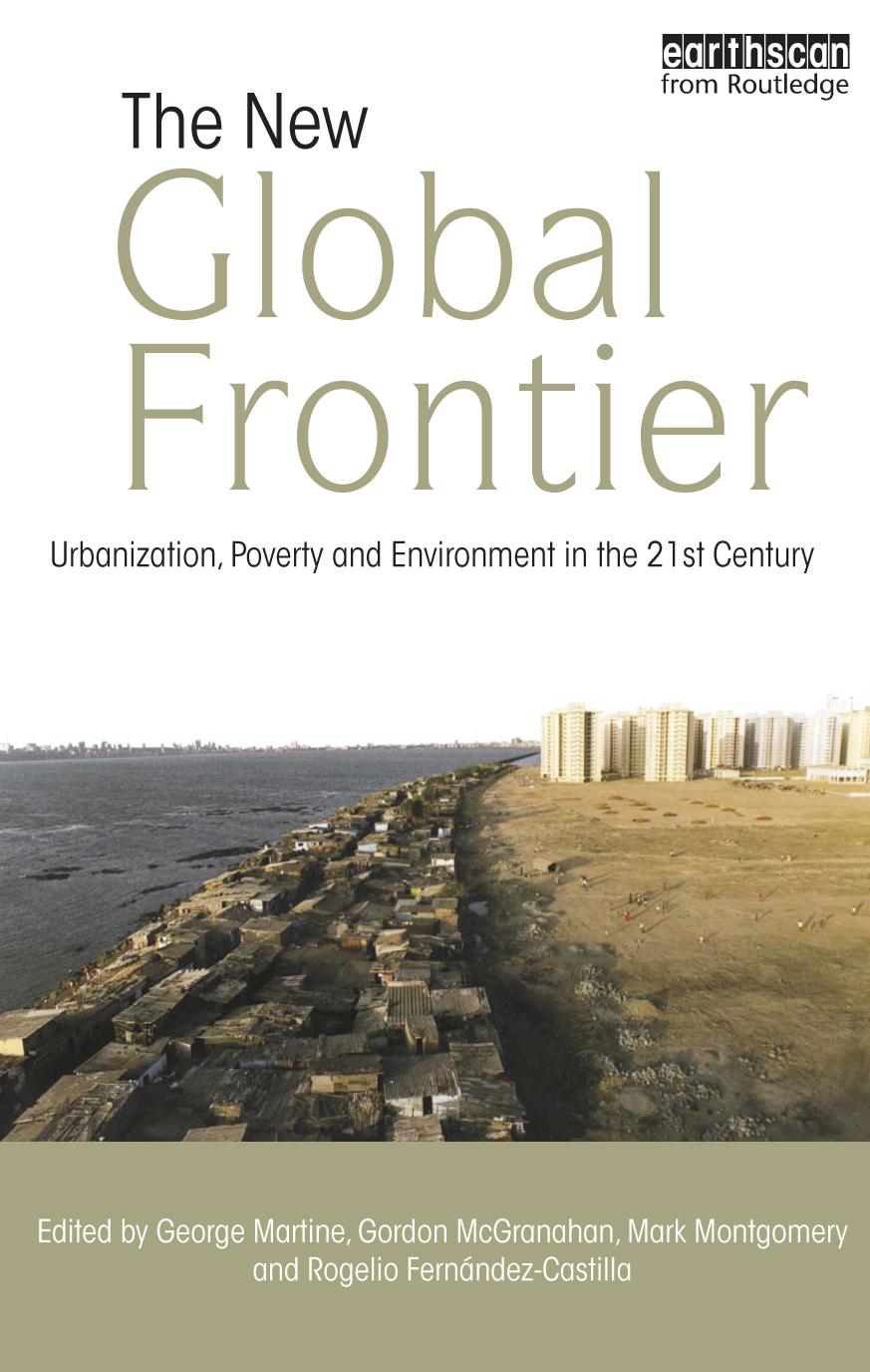
The worlds developing countries will be experiencing massive increases in their urban populations over the 21st century. If managed intelligently and humanely, this growth can pave the way to sustainable development; otherwise, it will favour higher levels of poverty and environmental stress. The outcome depends on decisions being made now.
The principal theme that runs through this volume is the need to transform urbanization into a positive force for development. Part I of this book reviews the demography of the urban transition, stressing the importance of benefi cial rural-urban connections and challenging commonly held misconceptions. Part II asks how urban housing, land and service provision can be improved in the face of rapid urban expansion, drawing lessons from experiences around the world. Part III analyses the challenges and opportunities that urbanization presents for improving living environments and reducing pressures on local and global ecosystems. These social and environmental challenges must be met in the context of fast-changing demographic circumstances; Part IV explores the range of opportunities that these transformations represent. These challenges and opportunities vary greatly across Africa, Asia and Latin America, as detailed in Part V.
Published with IIED and UNFPA
Betal nemt med kort, Klarna, Apple Pay eller Google Pay. Ikke tilfreds? Du har altid 14 dages fortrydelsesret. Læs mere i vores vilkår. Har du spørgsmål, så send os en mail på hello@memmo.org.
Memmo gør det nemmere at studere – uanset hvor du er i verden. Hos os samler du dine kursusbøger og smarte studieværktøjer ét sted: resuméer, quizzer, podcasts og flashcards. Og så er der Ted, din studieven, der svarer på alt, du undrer dig over. Over 50 000 studerende studerer allerede her – bygget til at hjælpe dig med at lære hurtigere og stresse mindre.