
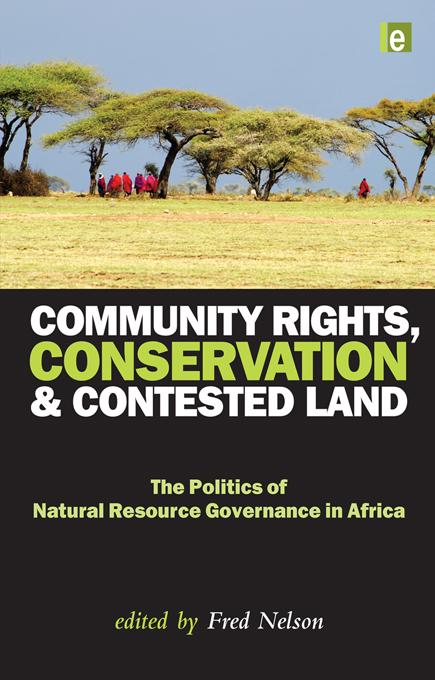
Natural resource governance is central to the outcomes of biodiversity conservation efforts and to patterns of economic development, particularly in resource-dependent rural communities. The institutional arrangements that define natural resource governance are outcomes of political processes, whereby numerous groups with often-divergent interests negotiate for access to and control over resources. These political processes determine the outcomes of resource governance reform efforts, such as widespread attempts to decentralize or devolve greater tenure over land and resources to local communities.
This volume examines the political dynamics of natural resource governance processes through a range of comparative case studies across east and southern Africa. These cases include both local and national settings, and examine issues such as land rights, tourism development, wildlife conservation, participatory forest management, and the impacts of climate change, and are drawn from both academics and field practitioners working across the region.
Published with IUCN, The Bradley Fund for the Environment, SASUSG and Norwegian Ministry of Foreign Affairs
Betal nemt med kort, Klarna, Apple Pay eller Google Pay. Ikke tilfreds? Du har altid 14 dages fortrydelsesret. Læs mere i vores vilkår. Har du spørgsmål, så send os en mail på hello@memmo.org.
Memmo gør det nemmere at studere – uanset hvor du er i verden. Hos os samler du dine kursusbøger og smarte studieværktøjer ét sted: resuméer, quizzer, podcasts og flashcards. Og så er der Ted, din studieven, der svarer på alt, du undrer dig over. Over 50 000 studerende studerer allerede her – bygget til at hjælpe dig med at lære hurtigere og stresse mindre.