
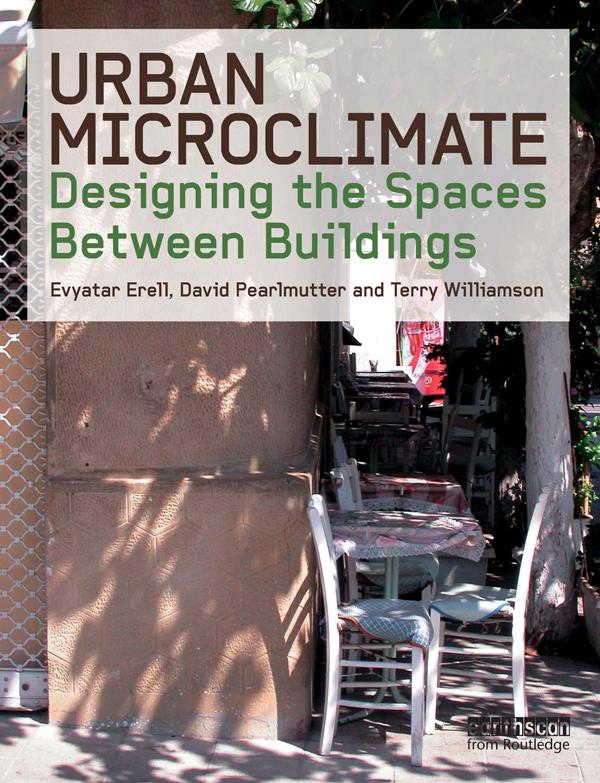
The quality of life of millions of people living in cities could be improved if the form of the city were to evolve in a manner appropriate to its climatic context. Climatically responsive urban design is vital to any notion of sustainability: it enables individual buildings to make use of renewable energy sources for passive heating and cooling, it enhances pedestrian comfort and activity in outdoor spaces, and it may even encourage city dwellers to moderate their dependence on private vehicles.
Urban Microclimate bridges the gap between climatology research and applied urban design. It provides architects and urban design professionals with an understanding of how the structure of the built environment at all scales affects microclimatic conditions in the space between buildings, and analyzes the interaction between microclimate and each of the elements of the urban landscape. In the first two sections of the book, the extensive body of work on this subject by climatologists and geographers is presented in the language of architecture and planning professionals. The third section follows each step in the design process, and in part four a critical analysis of selected case study projects provides a demonstration of the complexity of applied urban design. Practitioners will find in this book a useful guide to consult, as they address these key environmental issues in their own work.
Betal nemt med kort, Klarna, Apple Pay eller Google Pay. Ikke tilfreds? Du har altid 14 dages fortrydelsesret. Læs mere i vores vilkår. Har du spørgsmål, så send os en mail på hello@memmo.org.
Memmo gør det nemmere at studere – uanset hvor du er i verden. Hos os samler du dine kursusbøger og smarte studieværktøjer ét sted: resuméer, quizzer, podcasts og flashcards. Og så er der Ted, din studieven, der svarer på alt, du undrer dig over. Over 50 000 studerende studerer allerede her – bygget til at hjælpe dig med at lære hurtigere og stresse mindre.