
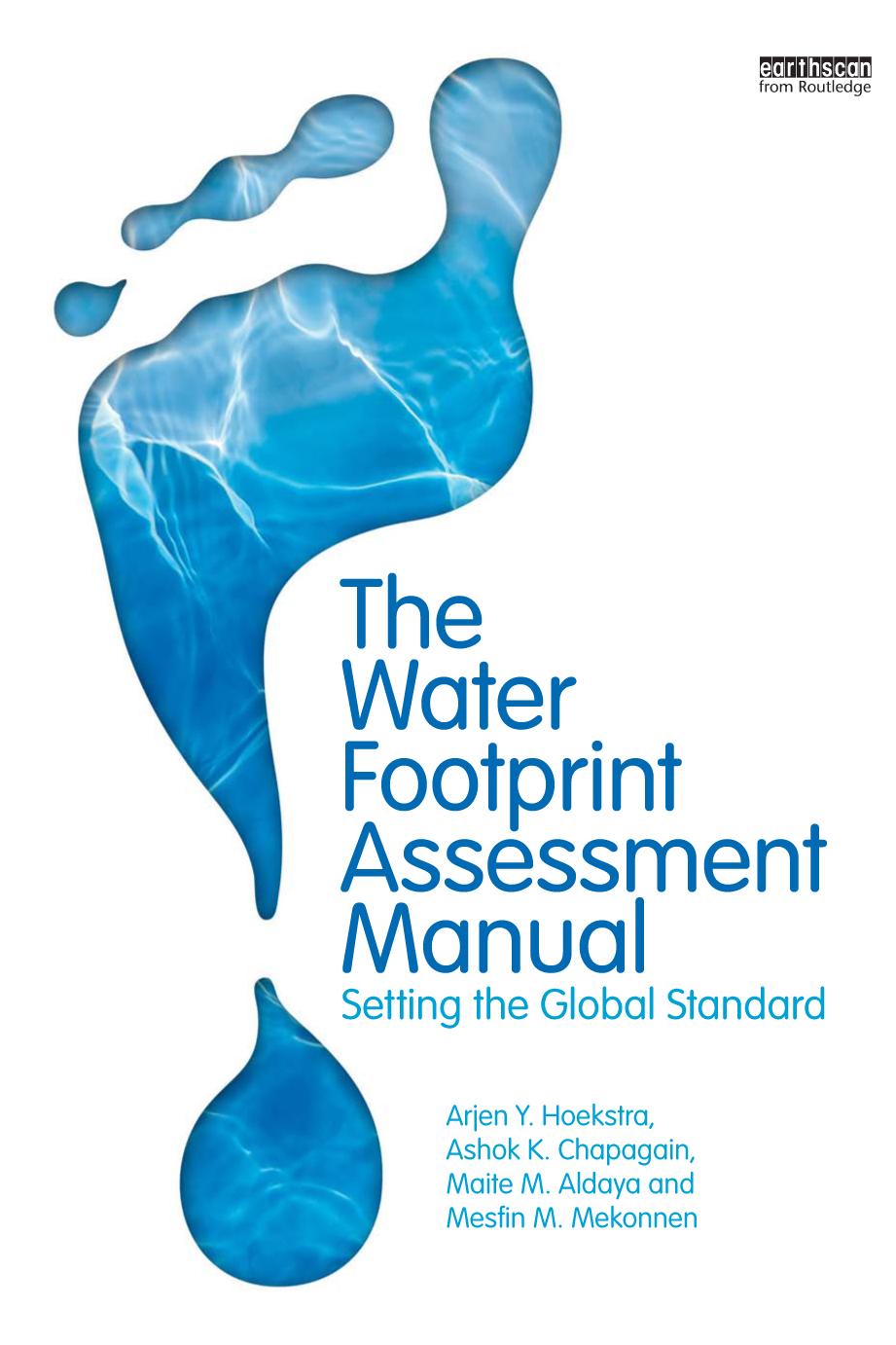
People use lots of water for drinking, cooking and washing, but significantly more for producing things such as food, paper and cotton clothes. The water footprint is an indicator of water use that looks at both direct and indirect water use of a consumer or producer. Indirect use refers to the 'virtual water' embedded in tradable goods and commodities, such as cereals, sugar or cotton. The water footprint of an individual, community or business is defined as the total volume of freshwater that is used to produce the goods and services consumed by the individual or community or produced by the business.
This book offers a complete and up-to-date overview of the global standard on water footprint assessment as developed by the Water Footprint Network. More specifically it:
o Provides a comprehensive set of methods for water footprint assessment
o Shows how water footprints can be calculated for individual processes and products, as well as for consumers, nations and businesses
o Contains detailed worked examples of how to calculate green, blue and grey water footprints
o Describes how to assess the sustainability of the aggregated water footprint within a river basin or the water footprint of a specific product
o Includes an extensive library of possible measures that can contribute to water footprint reduction
Betal nemt med kort, Klarna, Apple Pay eller Google Pay. Ikke tilfreds? Du har altid 14 dages fortrydelsesret. Læs mere i vores vilkår. Har du spørgsmål, så send os en mail på hello@memmo.org.
Memmo gør det nemmere at studere – uanset hvor du er i verden. Hos os samler du dine kursusbøger og smarte studieværktøjer ét sted: resuméer, quizzer, podcasts og flashcards. Og så er der Ted, din studieven, der svarer på alt, du undrer dig over. Over 50 000 studerende studerer allerede her – bygget til at hjælpe dig med at lære hurtigere og stresse mindre.