
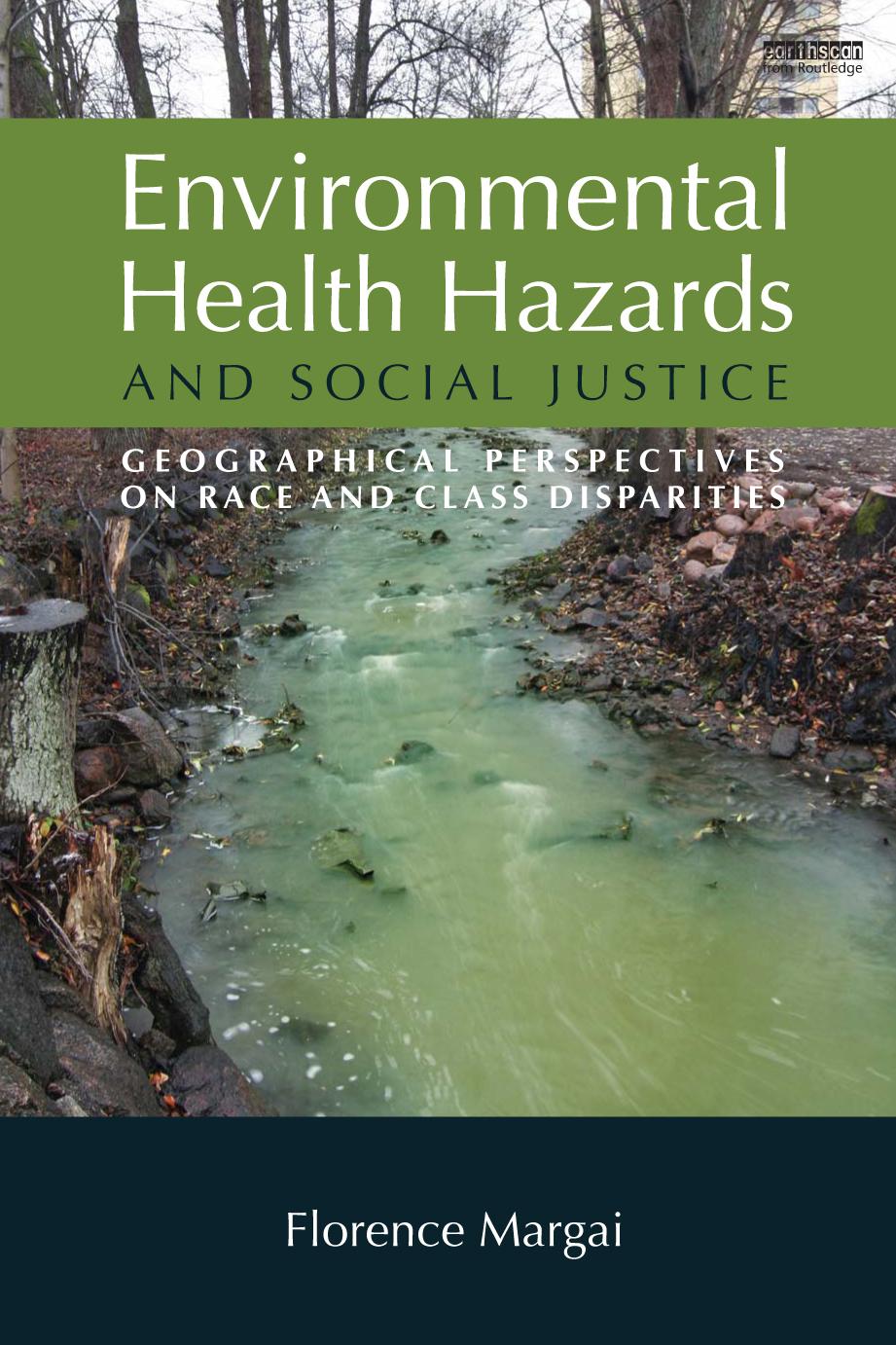
This book provides geographic perspectives and approaches for use in assessing the distribution of environmental health hazards and disease outcomes among disadvantaged population groups. Estimates suggest that about 40 per cent of the global burden of disease is attributable to exposures to biological and chemical pathogens in the physical environment. And with today's rapid rate of globalization, and these hazardous health effects are likely to increase, with low income and underrepresented communities facing even greater risks. In many places around the world, marginalized communities unwillingly serve as hosts of noxious facilities such as chemical industrial plants, extractive facilities (oil and mining) and other destructive land use activities. Others are being used as illegal dumping grounds for hazardous materials and electronic wastes resulting in air, soil and groundwater contamination.
The book informs readers about the geography and emergent health risks that accompany the location of these hazards, with emphasis on vulnerable population groups. The approach is applications-oriented, illustrating the use of health data and geographic approaches to uncover the root causes, contextual factors and processes that produce contaminated environments. Case studies are drawn from the author's research in the United States and Africa, along with a literature review of related studies completed in Europe, Asia and South America. This comparative approach allows readers to better understand the manifestation of environmental hazards and inequities at different spatial scales with localized disparities evident in both developed and developing countries.
Betal nemt med kort, Klarna, Apple Pay eller Google Pay. Ikke tilfreds? Du har altid 14 dages fortrydelsesret. Læs mere i vores vilkår. Har du spørgsmål, så send os en mail på hello@memmo.org.
Memmo gør det nemmere at studere – uanset hvor du er i verden. Hos os samler du dine kursusbøger og smarte studieværktøjer ét sted: resuméer, quizzer, podcasts og flashcards. Og så er der Ted, din studieven, der svarer på alt, du undrer dig over. Over 50 000 studerende studerer allerede her – bygget til at hjælpe dig med at lære hurtigere og stresse mindre.