
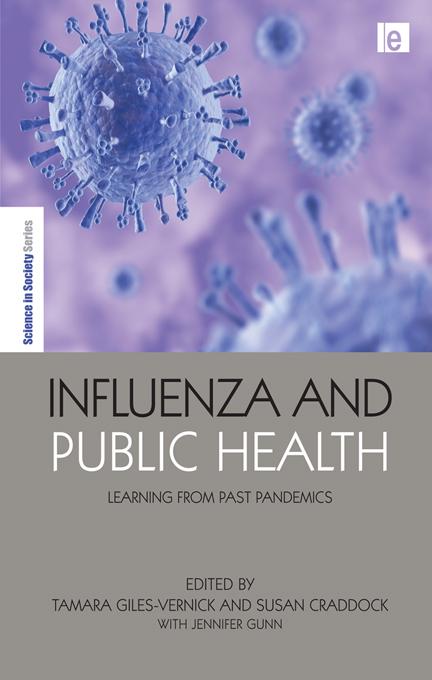
Major influenza pandemics pose a constant threat. As evidenced by recent H5N1 avian flu and novel H1N1, influenza outbreaks can come in close succession, yet differ in their transmission and impact. With accelerated levels of commercial and population mobility, new forms of flu virus can also spread across the globe with unprecedented speed. Responding quickly and adequately to each outbreak becomes imperative on the part of governments and global public health organizations, but the difficulties of doing so are legion. One tool for pandemic planning is analysis of responses to past pandemics that provide insight into productive ways forward.
This book investigates past influenza pandemics in light of today's, so as to afford critical insights into possible transmission patterns, experiences, mistakes, and interventions. It explores several pandemics over the past century, from the infamous 1918 Spanish Influenza, the avian flu epidemic of 2003, and the novel H1N1 pandemic of 2009, to lesser-known outbreaks such as the 1889-90 influenza pandemic and the Hong Kong Flu of 1968. Contributors to the volume examine cases from a wide range of disciplines, including history, sociology, epidemiology, virology, geography, and public health, identifying patterns that cut across pandemics in order to guide contemporary responses to infectious outbreaks.
Betal nemt med kort, Klarna, Apple Pay eller Google Pay. Ikke tilfreds? Du har altid 14 dages fortrydelsesret. Læs mere i vores vilkår. Har du spørgsmål, så send os en mail på hello@memmo.org.
Memmo gør det nemmere at studere – uanset hvor du er i verden. Hos os samler du dine kursusbøger og smarte studieværktøjer ét sted: resuméer, quizzer, podcasts og flashcards. Og så er der Ted, din studieven, der svarer på alt, du undrer dig over. Over 50 000 studerende studerer allerede her – bygget til at hjælpe dig med at lære hurtigere og stresse mindre.