
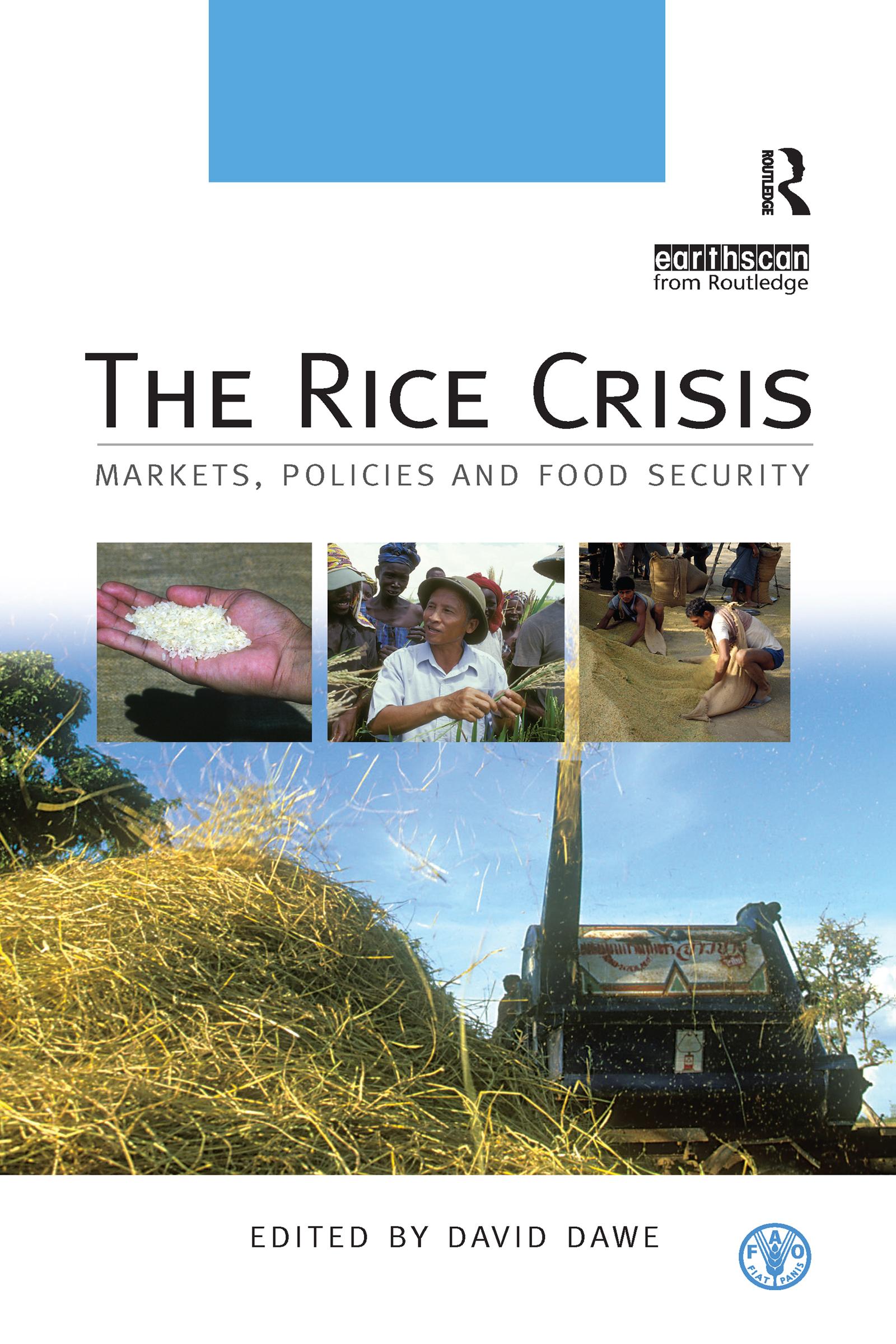
The recent escalation of world food prices – particularly for cereals - prompted mass public indignation and demonstrations in many countries, from the price of tortilla flour in Mexico to that of rice in the Philippines and pasta in Italy. The crisis has important implications for future government trade and food security policies, as countries re-evaluate their reliance on potentially more volatile world markets to augment domestic supplies of staple foods.
This book examines how government policies caused and responded to soaring world prices in the particular case of rice, which is the world's most important source of calories for the poor. Comparable case studies of policy reactions in different countries, principally across Asia, but also including the USA, provide the understanding necessary to evaluate the impact of trade policy on the food security of poor farmers and consumers. They also provide important insights into the concerns of developing countries that are relevant for future international trade negotiations in key agricultural commodities. As a result, more appropriate policies can be put in place to ensure more stable food supplies in the future. Published with the Food and Agriculture (FAO) Organization of the United Nations
Betal nemt med kort, Klarna, Apple Pay eller Google Pay. Ikke tilfreds? Du har altid 14 dages fortrydelsesret. Læs mere i vores vilkår. Har du spørgsmål, så send os en mail på hello@memmo.org.
Memmo gør det nemmere at studere – uanset hvor du er i verden. Hos os samler du dine kursusbøger og smarte studieværktøjer ét sted: resuméer, quizzer, podcasts og flashcards. Og så er der Ted, din studieven, der svarer på alt, du undrer dig over. Over 50 000 studerende studerer allerede her – bygget til at hjælpe dig med at lære hurtigere og stresse mindre.