
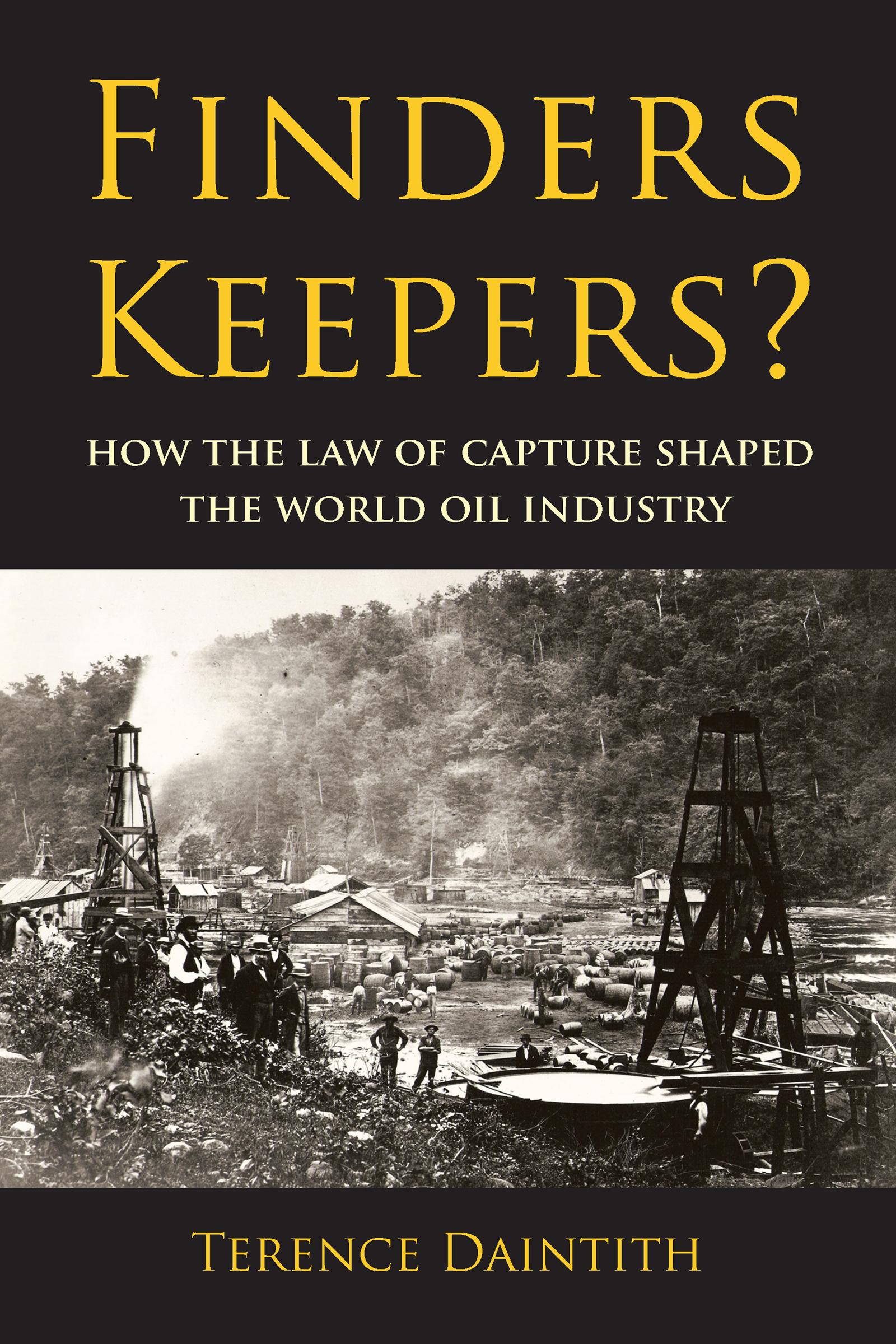
Since the beginnings of the oil industry, production activity has been governed by the 'law of capture,' dictating that one owns the oil recovered from one's property even if it has migrated from under neighboring land. This 'finders keepers' principle has been excoriated by foreign critics as a 'law of the jungle' and identified by American commentators as the root cause of the enormous waste of oil and gas resulting from US production methods in the first half of the twentieth century. Yet while in almost every other country the law of capture is today of marginal significance, it continues in full vigour in the United States, with potentially wasteful results.
In this richly documented account, Terence Daintith adopts a historical and comparative perspective to show how legal rules, technical knowledge (or the lack of it) and political ideas combined to shape attitudes and behavior in the business of oil production, leading to the original adoption of the law of capture, its consolidation in the United States, and its marginalization elsewhere.
Betal nemt med kort, Klarna, Apple Pay eller Google Pay. Ikke tilfreds? Du har altid 14 dages fortrydelsesret. Læs mere i vores vilkår. Har du spørgsmål, så send os en mail på hello@memmo.org.
Memmo gør det nemmere at studere – uanset hvor du er i verden. Hos os samler du dine kursusbøger og smarte studieværktøjer ét sted: resuméer, quizzer, podcasts og flashcards. Og så er der Ted, din studieven, der svarer på alt, du undrer dig over. Over 50 000 studerende studerer allerede her – bygget til at hjælpe dig med at lære hurtigere og stresse mindre.