
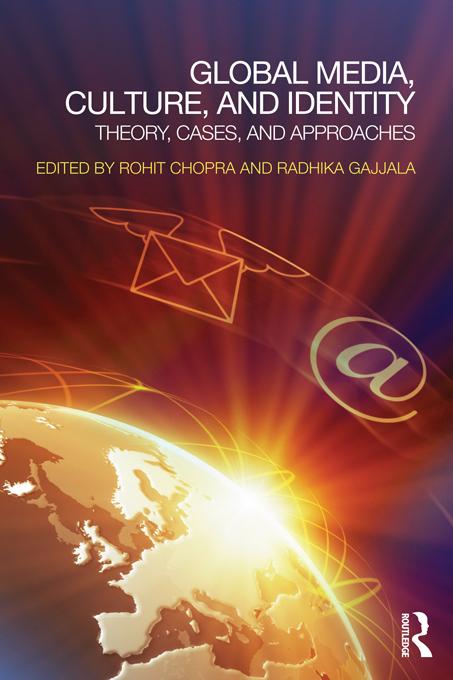
This edited volume examines the ways that global media shapes relations between place, culture, and identity. Through the included essays, Chopra and Gajjala offer a mix of theoretical reflections and empirical case studies that will help readers understand how the media can shape cultural identities and, conversely, how cultural formations can influence the political economy of global media. The interdisciplinary, international scholars gathered here push the discussion of what it means to do global media studies beyond uncritical celebrations of the global media technologies (or globalization) as well as beyond perspectives that are a priori dismissive of the possibilities of global media.
Some of the key questions and themes that the international contributors explore within the text include: Is the global audience of global television the same as the global audience of the internet? Can we conceptualize the global culture-media-identity dynamic beyond the discourse of postcolonialism? How does the globalization of media affect feelings of nationalism? How is the growth of a consumer "global middle class" spread, and resisted, through media? Global Media, Identity, and Culture takes a comparative media approach to addressing these, and other, issues across media forms including print, television, film, and new media
Betal nemt med kort, Klarna, Apple Pay eller Google Pay. Ikke tilfreds? Du har altid 14 dages fortrydelsesret. Læs mere i vores vilkår. Har du spørgsmål, så send os en mail på hello@memmo.org.
Memmo gør det nemmere at studere – uanset hvor du er i verden. Hos os samler du dine kursusbøger og smarte studieværktøjer ét sted: resuméer, quizzer, podcasts og flashcards. Og så er der Ted, din studieven, der svarer på alt, du undrer dig over. Over 50 000 studerende studerer allerede her – bygget til at hjælpe dig med at lære hurtigere og stresse mindre.