
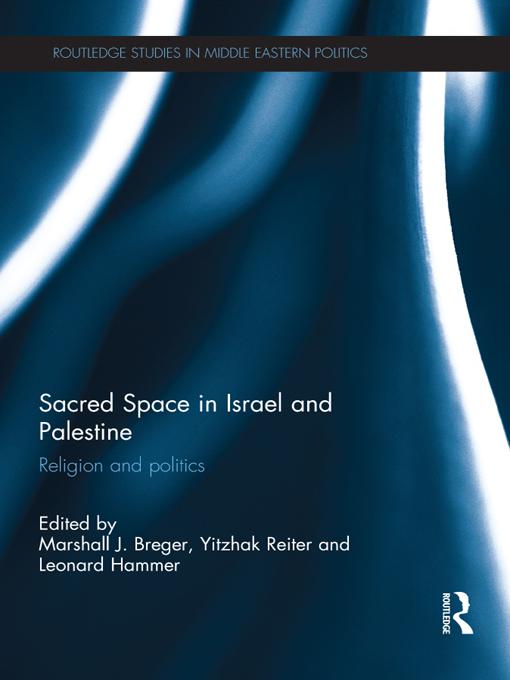
Religion and religious nationalism have long played a central role in many ethnic and national conflicts, and the importance of religion to national identity means that territorial disputes can often focus on the contestation of holy places and sacred territory. Looking at the case of Israel and Palestine, this book highlights the nexus between religion and politics through the process of classifying holy places, giving them meaning and interpreting their standing in religious and civil law, within governmental policy, and within international and local communities.
Written by a team of renowned scholars from within and outside the region, this book follows on from Holy Places in the Israeli-Palestinian Conflict: Confrontation and Co-existence to provide an insightful look into the politics of religion and space. Examining Jerusalem’s holy basin from a variety of perspectives and disciplines, it provides unique insights into the way Jewish, Christian and Muslim authorities, scholars and jurists regard sacred space and the processes, grass roots and official, by which spaces become holy in the eyes of particular communities. Filling an important gap in the literature on Middle East peacemaking, the book will be of interest to scholars and students of the Middle East conflict, conflict resolution, political science, urban studies and history of religion.
Betal nemt med kort, Klarna, Apple Pay eller Google Pay. Ikke tilfreds? Du har altid 14 dages fortrydelsesret. Læs mere i vores vilkår. Har du spørgsmål, så send os en mail på hello@memmo.org.
Memmo gør det nemmere at studere – uanset hvor du er i verden. Hos os samler du dine kursusbøger og smarte studieværktøjer ét sted: resuméer, quizzer, podcasts og flashcards. Og så er der Ted, din studieven, der svarer på alt, du undrer dig over. Over 50 000 studerende studerer allerede her – bygget til at hjælpe dig med at lære hurtigere og stresse mindre.