
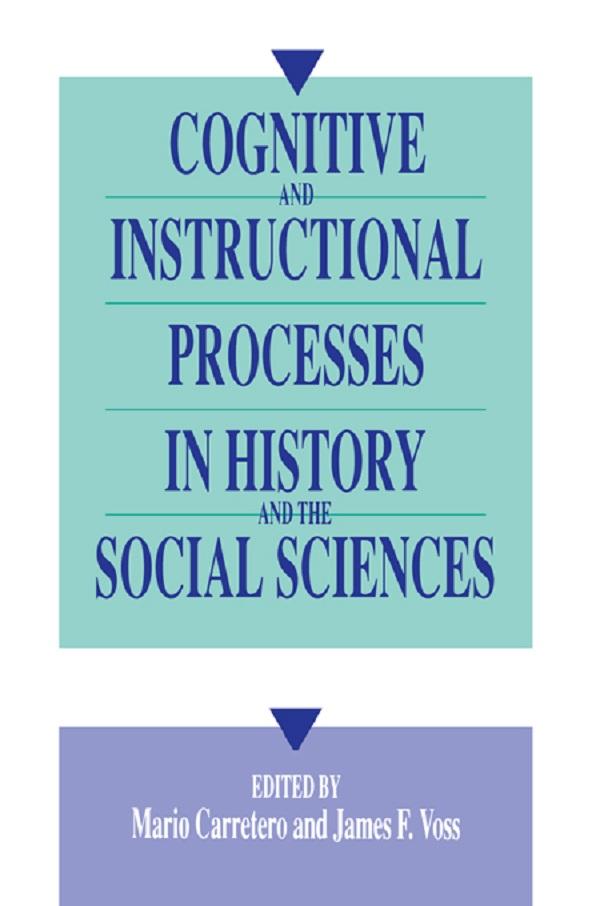
This volume is a direct result of an international conference that brought together a number of scholars from Europe and the United States to discuss their ideas and research about cognitive and instructional processes in history and the social sciences. As such, it fills a major gap in the study of how people learn and reason in the context of particular subject matter domains and how instruction can be improved in order to facilitate better learning and reasoning. Previous cognitive work on subject matter learning has been focused primarily upon mathematics and physics; the present effort provides the first such venture examining the history and social science domains from a cognitive perspective.
The different sections of the book cover topics related to comprehension, learning, and instruction of history and the social sciences, including:
*the development of some social sciences concepts,
*the teaching of social sciences -- problems and questions arising from this cognitive perspective of learning,
*the comprehension and learning from historical texts,
*how people and students understand historical causality and provide explanations of historical events, and
*the deduction processes involved in reasoning about social sciences contents.
This volume will be useful for primary and secondary school teachers and for cognitive and instructional researchers interested in problem solving and reasoning, text comprehension, domain-specific knowledge acquisition and concept development.
Betal nemt med kort, Klarna, Apple Pay eller Google Pay. Ikke tilfreds? Du har altid 14 dages fortrydelsesret. Læs mere i vores vilkår. Har du spørgsmål, så send os en mail på hello@memmo.org.
Memmo gør det nemmere at studere – uanset hvor du er i verden. Hos os samler du dine kursusbøger og smarte studieværktøjer ét sted: resuméer, quizzer, podcasts og flashcards. Og så er der Ted, din studieven, der svarer på alt, du undrer dig over. Over 50 000 studerende studerer allerede her – bygget til at hjælpe dig med at lære hurtigere og stresse mindre.