
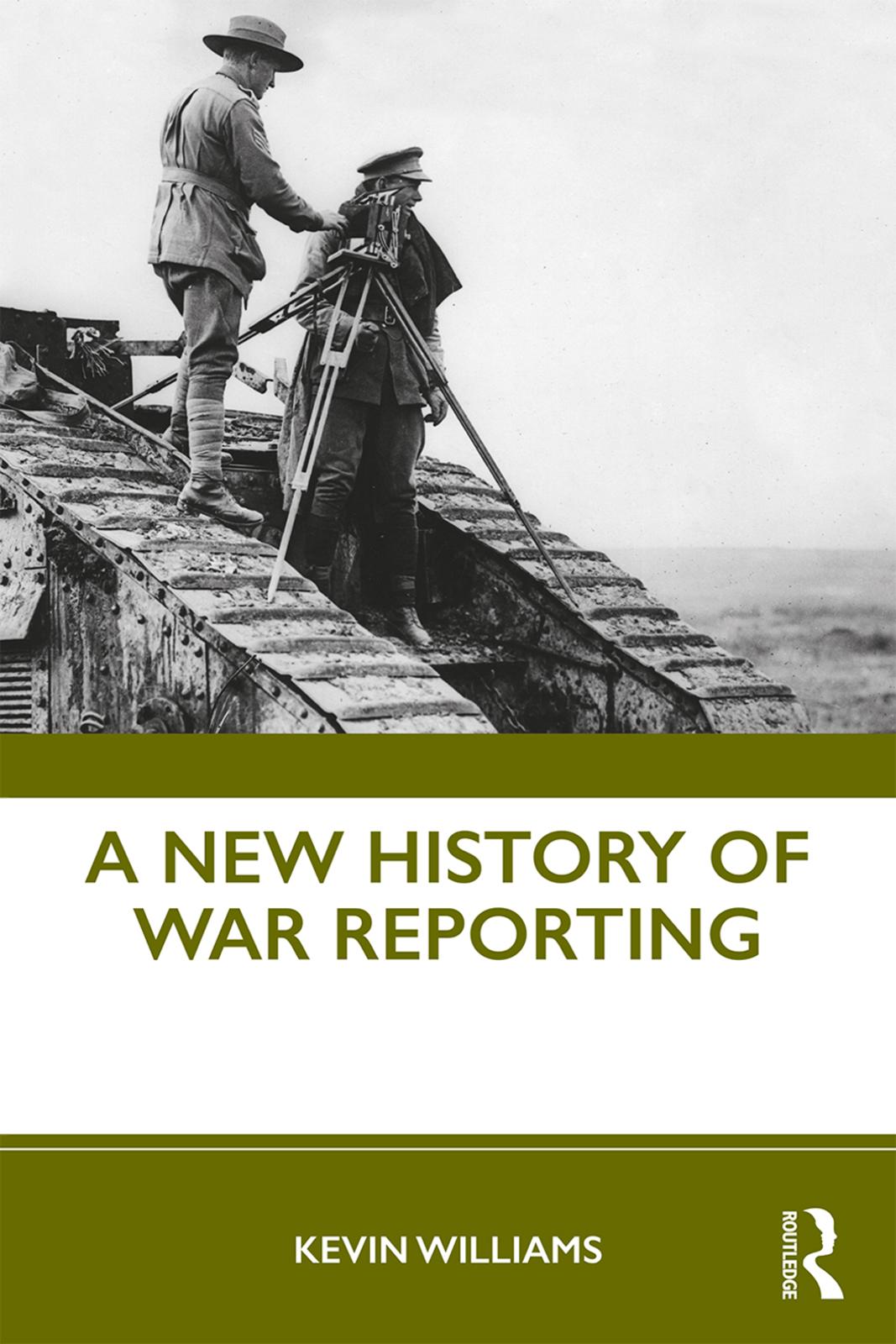
This book takes a fresh look at the history of war reporting to understand how new technology, new ways of waging war and new media conditions are changing the role and work of today’s war correspondent.
Focussing on the mechanics of war reporting and the logistical and institutional pressures on correspondents, the book further examines the role of war propaganda, accreditation and news management in shaping the evolution of the specialism. Previously neglected conflicts and correspondents are reclaimed and wars considered as key moments in the history of war reporting such as the Crimean War (1854-56) and the Great War (1914-18) are re-evaluated.
The use of objectivity as the yardstick by which to assess the performance of war correspondents is questioned. The emphasis is instead placed on war as a messy business which confronts reporters and photographers with conditions that challenge the norms of professional practice. References to the ‘demise of the war correspondent’ have accompanied the growth of the specialism since the days of William Howard Russell, the so-called father of war reporting. This highlights the fragile nature of this sub-genre of journalism and emphasises that continuity as much as change characterises the work of the war correspondent.
A thematically organised, historically rich introduction, this book is ideal for students of journalism, media and communication.
Betal nemt med kort, Klarna, Apple Pay eller Google Pay. Ikke tilfreds? Du har altid 14 dages fortrydelsesret. Læs mere i vores vilkår. Har du spørgsmål, så send os en mail på hello@memmo.org.
Memmo gør det nemmere at studere – uanset hvor du er i verden. Hos os samler du dine kursusbøger og smarte studieværktøjer ét sted: resuméer, quizzer, podcasts og flashcards. Og så er der Ted, din studieven, der svarer på alt, du undrer dig over. Over 50 000 studerende studerer allerede her – bygget til at hjælpe dig med at lære hurtigere og stresse mindre.