
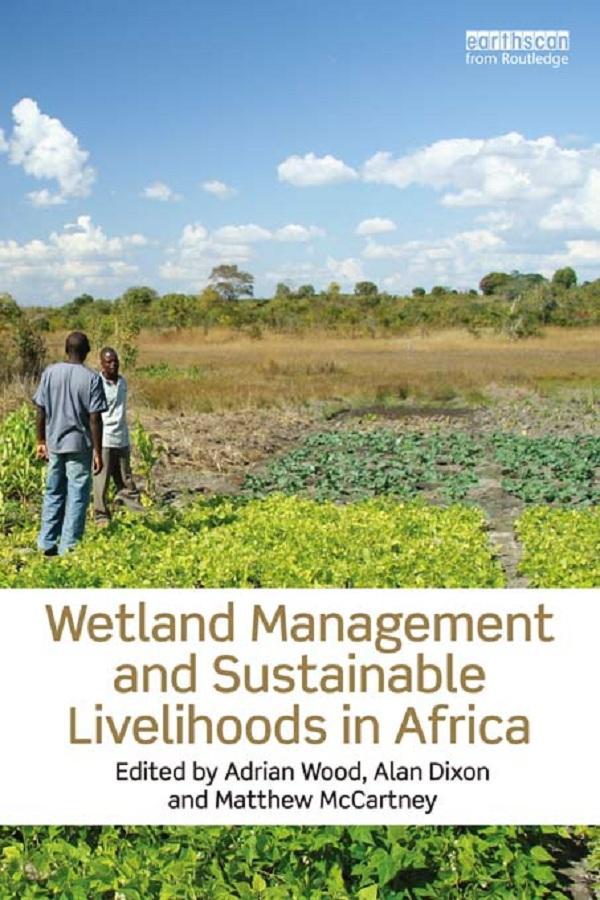
In this book the authors argue for a paradigm shift in the way African wetlands are considered. Current policies and wetland management are too frequently underpinned by a perspective that views agriculture simply as a threat and disregards its important contribution to livelihoods. In rural areas where people are entrenched in poverty, wetlands (in particular wetland agriculture) have a critical role to play in supporting and developing peoples' livelihoods. Furthermore, as populations rise and climate change takes grip they will be increasingly important.
The authors argue that an approach to wetland management that is much more people focused is required. That is an approach that instead of being concerned primarily with environmental outcomes is centred on livelihood outcomes supported by the sustainable use of natural wetland resources.
The authors stress the need for Integrated Water Resource Management and landscape approaches to ensure sustainable use of wetlands throughout a river catchment and the need for wetland management interventions to engage with a wide range of stakeholders. They also assess the feasibility of creating incentives and value in wetlands to support sustainable use. Drawing on nine empirical case studies, this book highlights the different ways in which sustainable use of wetlands has been sought, each case focusing on specific issues about wetlands, agriculture and livelihoods.
Betal nemt med kort, Klarna, Apple Pay eller Google Pay. Ikke tilfreds? Du har altid 14 dages fortrydelsesret. Læs mere i vores vilkår. Har du spørgsmål, så send os en mail på hello@memmo.org.
Memmo gør det nemmere at studere – uanset hvor du er i verden. Hos os samler du dine kursusbøger og smarte studieværktøjer ét sted: resuméer, quizzer, podcasts og flashcards. Og så er der Ted, din studieven, der svarer på alt, du undrer dig over. Over 50 000 studerende studerer allerede her – bygget til at hjælpe dig med at lære hurtigere og stresse mindre.