
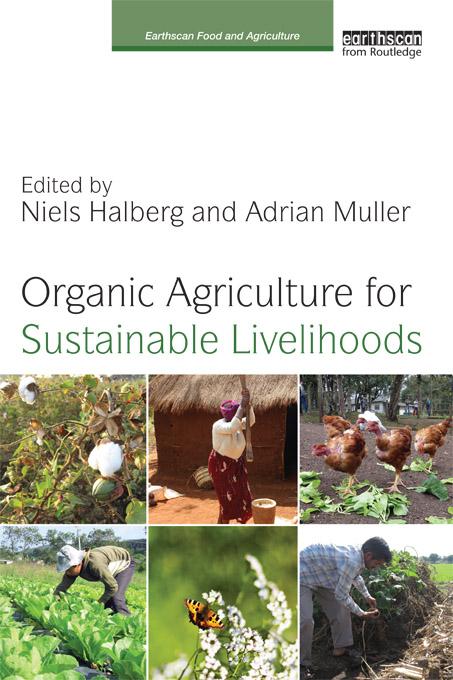
This book provides a timely analysis and assessment of the potential of organic agriculture (OA) for rural development and the improvement of livelihoods. It focuses on smallholders in developing countries and in countries of economic transition, but there is also coverage of and comparisons with developed countries. It covers market-oriented approaches and challenges for OA as part of high value chains and as an agro-ecologically based development for improving food security. It demonstrates the often unrecognised roles that organic farming can play in climate change, food security and sovereignty, carbon sequestration, cost internalisations, ecosystems services, human health and the restoration of degraded landscapes.
The chapters specifically provide readers with:
- an overview of the state of research on OA from socio-economic, environmental and agro-ecological perspectives
- an analysis of the current and potential role of OA in improving livelihoods of farmers, in sustainable value chain development, and in implementation of agro-ecological methods
- proposed strategies for exploiting and improving the potential of OA and overcoming the constraints for further development
- a review of the strengths and weaknesses of OA in a sustainable development context
Betal nemt med kort, Klarna, Apple Pay eller Google Pay. Ikke tilfreds? Du har altid 14 dages fortrydelsesret. Læs mere i vores vilkår. Har du spørgsmål, så send os en mail på hello@memmo.org.
Memmo gør det nemmere at studere – uanset hvor du er i verden. Hos os samler du dine kursusbøger og smarte studieværktøjer ét sted: resuméer, quizzer, podcasts og flashcards. Og så er der Ted, din studieven, der svarer på alt, du undrer dig over. Over 50 000 studerende studerer allerede her – bygget til at hjælpe dig med at lære hurtigere og stresse mindre.