
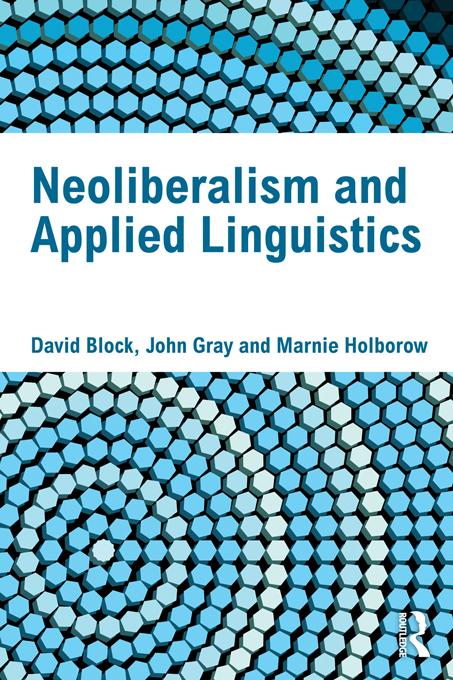
This book explores neoliberalism – a view of the world that puts the market at its centre- from the perspective of applied linguistics.
Neoliberalism and Applied Linguistics argues that while applied linguistics has become more interdisciplinary in orientation, it has ignored or downplayed the role of political economy, namely the way in which social, political and economic factors relate to one another within the context of a capitalist economy. The authors take the view that engagement with political economy is central to any fully rounded analysis of language and language-related issues in the world today and their collaboration in this volume represents an initial attempt to redress what they perceive to be an imbalance in the field.
The book begins with a discussion of neoliberalism and an analysis of the ways in which neoliberal ideology impacts on language. This is followed by a discussion of how globalization and identity have been conceptualised in applied linguistics in ways which have ignored the political centrality of class – a concept which the authors see as integral to their perspective. The book concludes with an analysis of the ways in which neoliberal ideology plays out in two key areas of applied linguistics - language teaching and language teacher education.
Neoliberalism and Applied Linguistics is essential reading for advanced undergraduates, postgraduates and researchers in applied linguistics.
Betal nemt med kort, Klarna, Apple Pay eller Google Pay. Ikke tilfreds? Du har altid 14 dages fortrydelsesret. Læs mere i vores vilkår. Har du spørgsmål, så send os en mail på hello@memmo.org.
Memmo gør det nemmere at studere – uanset hvor du er i verden. Hos os samler du dine kursusbøger og smarte studieværktøjer ét sted: resuméer, quizzer, podcasts og flashcards. Og så er der Ted, din studieven, der svarer på alt, du undrer dig over. Over 50 000 studerende studerer allerede her – bygget til at hjælpe dig med at lære hurtigere og stresse mindre.